Travel Insurance Basics: What Every Traveler Misses


The Truth About Travel Insurance: Why “Coverage” Isn’t What You Think
The Comforting Promise vs. The Contractual Reality
Travel insurance basics are often presented as a comforting safety net, something that wraps itself around your entire trip like a warm blanket. But anyone who has ever filed a claim knows that travel insurance is really a contract: precise, conditional, technical, and sometimes surprisingly unforgiving.
The image we see in marketing campaigns like happy travelers, smooth reimbursements, and “coverage for every scenario” feels simple. The actual policy is not. It protects you, but only in specific, controlled ways, with rules most travelers never read and conditions they only discover when something has already gone wrong.
This blog cuts through the marketing fluff and shows you exactly what travel insurance really covers, and where it quietly leaves you exposed.
Disclaimer: This guide is for informational purposes only. We are not affiliated with any brands or services mentioned. Always do your own research before purchasing or using any product or service.
Why Most Travelers Buy Policies They Don’t Fully Understand
Most travelers buy insurance as an afterthought. It gets added during checkout on airline websites or booked along with a hotel because a checkbox suggests it. It feels like a small, smart addition, until you realize the words you glanced over (“covered reason,” “documentation required,” “pre-existing condition,” “coverage limits”) actually determine everything.
The problem isn’t that travel insurance doesn’t work; it’s that travelers misunderstand how and when it works.
The Fine-Print Gap: What Insurers Expect You to Already Know
Insurers assume one thing from you: that you understand contracts. They assume you know, for example, that “weather delay” doesn’t always equal “covered cancellation,” or that “illness” means “medically documented illness with proof submitted within deadlines.” These assumptions create a gap: your expectation vs. their definition. And this is where many claims fall apart.
Travel Insurance Basics: How Coverage Actually Works
Most travelers assume travel insurance works like a universal safety net, but the reality is far more structured. Coverage only activates under specific conditions, and understanding those mechanics is the difference between a smooth claim and a frustrating denial.
Trip Cancellation Coverage and the Conditions Hidden Beneath It
Most people believe trip cancellation means “if I can’t go, I get my money back.” But cancellation only applies to the reasons listed in the policy. These reasons are narrow and often require third-party documentation.
If your passport appointment got delayed, or you simply felt worried about traveling, or your cousin’s wedding date changed, none of these are typically “covered reasons.” Even genuine emergencies can be denied if the documentation doesn’t meet the insurer’s standard.
Trip Interruption: The Most Misunderstood “Guarantee”
Interruption sounds like a generous promise: if your trip is cut short, insurance steps in. But it functions the same as cancellation; only specific events qualify. If your hotel messed up your booking, or your Airbnb host didn’t show up, interruption doesn’t apply.
If you had to reroute your trip due to local strikes or protests, you may also be denied unless the policy explicitly names these as covered incidents.
Medical Coverage Abroad: Not a Replacement for Health Insurance
Travel medical coverage is essential, but it is not a substitute for global health insurance. It is designed for sudden, emergency medical needs; not routine care, chronic conditions, or elective procedures. Many travelers wrongly assume it functions like national health insurance from home. It doesn’t. Insurers also require proof that your condition began during your trip and wasn’t tied to untreated or undisclosed past issues.
Emergency Evacuation vs. Medical Transport: Two Very Different Promises
Evacuation sounds like “we will fly you back home.” But emergency evacuation usually means taking you to the nearest facility capable of treating you, not your home country. Medical repatriation (the process of bringing you back home) is often a separate benefit or excluded entirely. Many travelers only learn this distinction when they are already sick abroad, and the bill becomes staggering.
Lost Baggage, Delayed Bags, and What Reimbursement Really Means
Baggage coverage seems straightforward, but compensation depends on valuation, receipts, depreciation, and strict reporting timelines. Travelers are often surprised that “lost” is not the same as “delayed,” and “delayed” is not the same as “misdirected.” Insurers also only reimburse after the airline issues official confirmation, which can take days.

Personal Liability and Legal Support: Rarely Explained Clearly
Few travelers even know this benefit exists. Personal liability protects you if you damage property or injure someone unintentionally. But it excludes anything considered negligence, intoxication, or criminal behavior. Many cases that travelers believe qualify are automatically denied.
What Travel Insurance Actually Covers Without the Marketing Gloss
Once you strip away the marketing language, travel insurance becomes much clearer and more limited. What truly matters is the exact list of covered reasons, because those are the only situations where your policy will actually pay out.
Covered Reasons: The Strict, Non-Negotiable List You Must Follow
Covered reasons form the backbone of your protection. They determine everything. This list is final; if a reason isn’t on it, the insurer doesn’t cover it. Even emotional emergencies, fears, or complicated travel disruptions don’t count unless explicitly written.
Why Weather Issues Are Not Always “Covered Events”
Travelers assume storms equal automatic reimbursement. But many policies only cover weather-related cancellations when airlines issue official shutdowns. “Bad weather you’re uncomfortable with” is not a covered reason. Nor are predicted storms that never escalate.
Illness Documentation: Proof Requirements No One Talks About
Policies expect medical documentation that meets exact specifications: diagnosis, date, medical necessity, provider signature, and sometimes official stamps. A simple doctor’s note may not satisfy the insurer. Travelers often learn this too late.
How Pre-Existing Conditions are Defined, and Why It Matters
Pre-existing conditions don’t just include chronic diseases. They may include symptoms you experienced but never treated. Insurers define these broadly. Unless you add a pre-existing condition waiver (available only within early booking windows), claims related to these conditions are usually denied.

Where Travel Insurance Quietly Fails You (And Most Travelers Never Realize It)
Travel insurance looks solid on the surface until you examine the situations where it silently stops working. These are the blind spots most travelers never discover until a claim gets denied.
Situations Denied Because You Didn’t Choose the Right Tier
Insurers offer multiple tiers for a reason. Basic tiers cover the essentials; higher tiers cover more complicated situations. Many claims get denied not because the situation wasn’t real, but because the traveler purchased the wrong tier.
The “High-Risk Activity” Loophole That Shocks Adventure Travelers
Activities like hiking, diving, or ATV rides often require special adventure coverage. Even something simple like renting a moped can be classified as high risk. Without the right add-on, travelers are left uncovered.
Political Unrest, Protests, or Visa Changes: Largely Uncovered
These issues tend to fall under “fear of travel” or “predictable events,” even if they drastically affect itineraries. Unless you buy “Cancel For Any Reason” (CFAR) coverage, political disruptions are usually excluded.
Pandemic-Related Issues: Still Not as Covered as Advertised
Even after COVID-19, many policies limit pandemic-related claims. Some cover medical treatment but not cancellations. Others exclude pandemics entirely. Travelers often assume pandemics are fully covered; they usually aren’t.
Alcohol, Mistakes, or “Negligence”: Automatic Disqualifiers
If alcohol or negligence is involved, insurers almost always deny the claim. Even mild oversight, like leaving your bag unattended, may disqualify you.
The Clock Rules: Why Timing (Not the Incident Itself) Can Deny Your Claim
Everything depends on timelines: when you file reports, when you notify airlines, and when you contact the insurer. Missing a deadline by a few hours can invalidate everything. This is the part most people don’t know until they read the denial letter.
Coverage Limits: Where Protection Ends, Even If You Are Covered
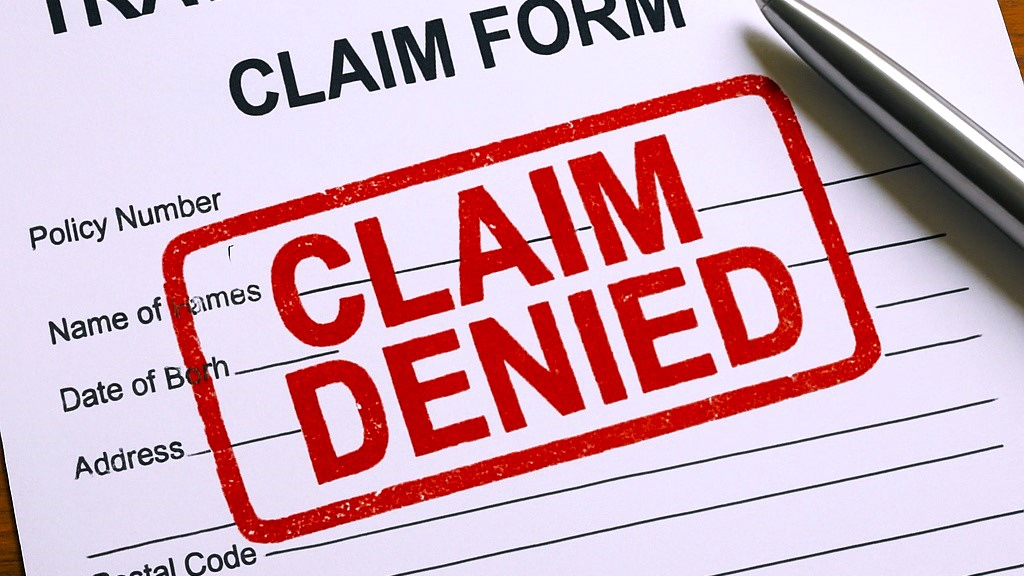
Even when your situation is technically covered, there’s a hard line where your protection stops. Coverage limits define exactly how far your insurer will go, and those caps are often much lower than travelers expect.
The Myth of Unlimited Medical Coverage Abroad
Even premium plans cap medical coverage. The higher the medical cost in the region, the more likely you are to exceed it. Travelers are often shocked at how quickly emergency care accumulates.
Reimbursement Caps: Why Your “$50,000” Isn’t Actually $50,000
Coverage limits often include sub-limits, meaning the advertised $50,000 could actually break down into numerous smaller caps. The true reimbursable amount is often far less than expected.
Sub-Limits for Electronics, Bags, and Valuables
Expensive items have separate limits; your $2,000 laptop may only be covered up to $500. Jewelry often has even lower caps.
Evacuation Limits That Don’t Get You Home
Evacuation sounds generous, but limits may end before repatriation. A traveler might be transported to a nearby country’s hospital, not home.
The Real Value of Travel Insurance (Only When You Choose Smartly)
The real strength of travel insurance doesn’t come from the marketing promises; it comes from choosing a plan that actually matches your risks. When selected wisely, it becomes one of the smartest investments you can make on any trip.
When Policies Are Truly Worth It (Clear, Real-World Scenarios)
Travel insurance matters most in medical emergencies, evacuation, major delays, and documented illness. It becomes especially valuable in countries where healthcare costs are high or where infrastructure is unpredictable.
When You’re Overpaying for Coverage You Already Have
Some travelers don’t realize their credit card already includes strong protection. Buying duplicate insurance wastes money. Understanding overlapping coverage helps you choose wisely.
What Frequent Travelers Should Consider Instead of One-Off Policies
Annual multi-trip policies often save money and provide stronger protection. They suit people who travel more than twice a year.
How to Read a Travel Insurance Policy Like a Professional
Most travelers skim their policies, but professionals read them like contracts because that’s exactly what they are. Learning how to interpret the fine print gives you a level of control most travelers never realize they can have.
Identifying “Covered Reasons” vs. Marketing Language
Marketing phrases like “travel with confidence” or “comprehensive protection” mean nothing in claims. The only words that matter are the covered reasons listed in the policy. Everything else is branding.
Spotting Automatic Disqualifiers Hidden in the Policy
Disqualifiers (negligence, alcohol, improper documents, undeclared medications) are usually buried deep. They should be the first section you read, not the last.
Understanding Claim Requirements Before You Need Them
Few travelers know that claims require exact documents: police reports, airline confirmations, medical records, receipts, and sometimes notarized statements. Understanding what is expected helps you prepare.
The Crucial Role of Documentation Travelers Overlook
The insurer pays based on evidence. If evidence is missing, incomplete, or submitted late, the claim collapses, even if the incident was legitimate.
Essential Links: Where Travelers Can Verify Coverage Before Buying
Insurance Policy Comparison Resources
To ensure you are truly getting the best value, not just the easiest option, use comparison sites like Squaremouth and InsureMyTrip. Input your specific trip details, such as cost, destination, duration, and age, to filter plans side-by-side.
This allows you to immediately see how policies stack up on critical elements like high medical limits and pre-existing condition waivers, ensuring you purchase a plan that meets all the points in your checklist, not just the lowest price.
Final Verdict: Travel Insurance Is Powerful, But Only When You Know Its Limits
The real verdict on travel insurance is simple: it can protect you brilliantly or fail you completely, depending on how well you understand it. Clarity, not optimism, is what determines whether your policy actually delivers when it matters.
Why “Travel Insurance Basics” Should Be Required Reading Before Every Trip
Understanding travel insurance basics empowers you. It protects you from unexpected financial hits, but it only works when you know what the contract requires. Most dissatisfaction comes not from bad policies, but from misunderstood expectations.
The New Traveler Mindset: Expect Less from Marketing, Demand More From Policies
Don’t let branding or emotional reassurance guide your purchase. Demand clarity. Read before buying. Confirm details with the insurer. Ask the hard questions. When done correctly, travel insurance becomes a powerful safety tool, not a false sense of security.

Practical Checklist: What to Confirm Before You Buy Any Travel Insurance
Before you hit “purchase,” confirm that your policy includes the essentials travelers usually think are covered, but often aren’t:
✅ Medical coverage that actually matters – at least $100,000 USD, ideally higher, covering sudden illness and injuries globally.
✅ Real emergency evacuation coverage – including transportation from remote areas to a proper hospital, not just basic ambulance fees.
✅ Repatriation back home – coverage to return you to your home country if medically necessary.
✅ Activity coverage for what you actually plan to do – scuba courses, horseback riding, trekking, safari activities, etc. Often, these require add-ons.
✅ Coverage in high-cost countries – such as the US, Japan, and parts of Europe, where medical care is extremely expensive.
✅ A policy you can extend mid-trip – crucial when travel plans shift or get longer.
✅ Protection for your essential valuables – not only bags, but phones, cameras, and electronics.
✅ A 24/7 global emergency hotline – with real human support, not automated systems.
✅ Trip cancellation and interruption protection – if you or a family member becomes ill, or if political unrest or emergencies shorten your trip.
✅ Online claims processing – so you’re not stuck mailing paperwork or dealing with intentionally slow claim systems.
Optional but Highly Recommended
✅ Verified insurer financial strength – checking ratings (A.M. Best, S&P) or verification through comparison sites to avoid companies that delay or deny payouts.
Additional things to check that are very relevant :
- Confirm the covered reasons line by line
- Read the exclusions clause very slowly
- Understand documentation requirements for claims
- Confirm whether your credit card already gives you coverage
- Contact the insurer and ask for a coverage summary in writing
How to Confirm a Policy Is Real (and Valid)
To verify the legitimacy of your policy:
• Call the insurance company’s official hotline (found on their website, not a third-party site).
• Ask them to read back the policy number, your name, and the coverage tier.
• Request written confirmation of coverage start/end dates.
• If using a comparison site, verify directly with the insurer, not only with the aggregator.
• Save all emails and screenshots of coverage documents.
Golden Tip: You can even call your airline, hotel, or health provider abroad to confirm they accept that insurer’s documentation. This extra step saves enormous stress during emergencies.
Now that you know the travel insurance basics, have you ever had a claim denied? Share your story in the comments below!

FAQs
1. Does travel insurance cover me if I change my mind about traveling?
Most travelers assume they can cancel for personal reasons and get a refund. In reality, standard travel insurance does not cover “I don’t feel like going,” fear of travel, schedule changes, or simply wanting to postpone a trip. Only “Cancel For Any Reason (CFAR)” coverage allows that, and even then, it typically reimburses only 50–75% of trip costs.
2. If my airline cancels my flight, does insurance reimburse me or the airline?
Travelers often assume insurance will step in immediately. But if the airline owes you a refund, the insurer usually won’t pay until the airline issues a written denial or partial reimbursement first. Insurance is secondary to airline compensation in most cases, which surprises many people.
3. Does travel insurance cover visa rejection or delays?
A huge misconception. Most travel insurance plans do not cover denied visas, late visa processing, or embassy scheduling issues unless the policy explicitly states it. Travelers usually discover this after losing thousands on bookings.
4. If my phone or laptop is stolen, do I get the full value back?
Most policies have strict sub-limits for electronics, often between $200 and $500, no matter how expensive your device is. Even with receipts, travelers rarely get full replacements, which leads to major disappointment.
5. Will insurance cover me if I travel to a country with an active travel advisory?
Most travelers don’t realize that if the U.S. State Department or their own government issues a Level 3 or Level 4 advisory, many policies automatically void certain protections, especially cancellations or emergency evacuations. Insurers expect travelers to check advisory levels before departure.