Why Manila’s Malls Are My Hub in the Philippines on a Budget


The first thing you notice after six to seven hours of travel is the air. Not the skyline. Not the traffic. The air.
After a ferry ride from Oriental Mindoro and a long bus trip crawling toward Metro Manila, your skin feels sticky, your patience thinner than you’d like to admit, and your back slightly sore from sitting too long. You step off near the city, and everything feels loud, fast, overwhelming.
And then you enter a mall.
Cold air hits your face. The noise softens into music and chatter. Security guards nod. Lights glow evenly. People are laughing, eating, and strolling without hurry.
If you’re exploring the Philippines on a budget, especially as someone from the province, this is where Manila begins to make sense.
For outsiders, mall culture in Manila can look excessive. Why are people always in malls? Why celebrate birthdays there? Why spend Sundays there? Why line up for coffee inside a building when there are beaches, parks, and mountains across the country?
But when you look closely, malls in Manila function like public squares, climate-controlled, transport-connected, socially safe community hubs. They exist because the city needed them to.
And I realized this slowly, across impulsive trips with my best friend.
MOA: Where the City Feels Contained

The first time I walked into SM Mall of Asia, I understood why it’s more than just a mall. Located along Seaside Boulevard in Bay City, Pasay, a reclaimed area facing Manila Bay, MOA spans 16 hectares, making it the largest mall in the Philippines and one of the biggest in the world.
At first, the size overwhelms. Corridors stretch endlessly, ceilings soar high, and escalators hum in constant rhythm. But after a few visits, patterns emerge: families gather by the seaside promenade, teenagers linger in Cyberzone, couples sip coffee, and office workers unwind.
MOA operates daily from 10:00 AM to 10:00 PM, offering predictability in a city defined by traffic and heat. You can shop, eat, or simply sit without worry. Air-conditioning and clean, safe spaces make it feel like a modern public square. Birthdays, first dates, family Sundays, or casual meetups all unfold naturally here.
By concentrating shopping, dining, entertainment, and social spaces under one roof, MOA doesn’t just contain the city; it organizes it. For someone navigating Manila while keeping an eye on a budget, that organization isn’t a luxury. It’s practical.
Food Courts as Social Glue

If I’m honest, my best friend and I don’t go to MOA just to shop. We go to eat.
Food is the heartbeat of the experience. Inside SM Mall of Asia, you can sample almost anything: Filipino favorites at Rico’s Lechon or The Aristocrat, Korean barbecue at Bonchon Chicken or Jin Joo Korean Grill, Japanese sushi and ramen at Hokkaido Ramen Santouka, Yabu: House of Katsu, or Oki Oki, Italian pasta at Bistro Ravioli or Italianni’s, classic American fare at Pizza Hut, 8 Cuts Burger Blends, or Chili’s, and desserts or milk teas at Llaollao, J.CO, or Mary Grace. For coffee rituals, Starbucks or Seattle’s Best Coffee completes the day.
Even outside the mall, there’s no way to resist the aroma of classic Filipino breads at Julie’s Bakeshop. Their ube cheese loaf is top-tier and worth a stop.
The variety reflects Manila itself, a city shaped by trade, migration, and global influence. Prices vary, but there’s something for nearly every budget, which matters when exploring the Philippines on a budget.
We always plan to try something new, yet somehow, when indecision hits, we find ourselves drawn to the familiar red-and-yellow bee. Jollibee has a gravitational pull. Predictable, nostalgic, and wallet-friendly, it wins every time.
Food courts here function as more than just dining areas; they’re communal spaces. Birthdays are celebrated over trays of local favorites. First dates unfold with shared fries. Barkada hangouts take up long tables. Family Sundays stretch lazily for hours.
These habits aren’t random. When shaded, safe, and air-conditioned public parks are scarce, food courts become social infrastructure. They offer a climate-controlled “public square” where people gather, linger, and connect without ever stepping outside.
Stepping Outside: Shock and Adaptation

Exit MOA, and the atmosphere changes instantly. The calm, climate-controlled interior gives way to the roar of the city. Cars, buses, jeepneys, motorcycles, and tuk-tuks pass continuously. If you’re from the province, the volume and the sheer density of vehicles can feel overwhelming.
Transportation quickly becomes a strategic decision. Grab rides are often the safest and easiest option, especially for those navigating Manila on a budget. They can be booked easily through an app, giving you peace of mind despite the higher cost. Taxis are still common, and motorbikes like Angkas offer speed, but after one ride that nearly made me lose my soul, I knew I’d stick to safer options.
Traffic is inevitable in a city this large. 15 million people commute daily, and patience is a must. The LRT and MRT, as well as other rail lines, are helpful, but standing room is the norm. You have to stay steady as trains lurch along, and yes, your senses pick up everything: the smell of burgers, sweat from hardworking commuters, and the occasional mix of exhaust fumes. Afternoon rush hours are the most intense, as everyone heads home after a long day at work.
This chaos shapes behavior. When getting around feels unpredictable, people gravitate toward centralized, multifunctional destinations like malls. Instead of hopping between multiple areas for food, errands, or socializing, you can do it all in one place.
IKEA: Aspirational Living in a Single Structure
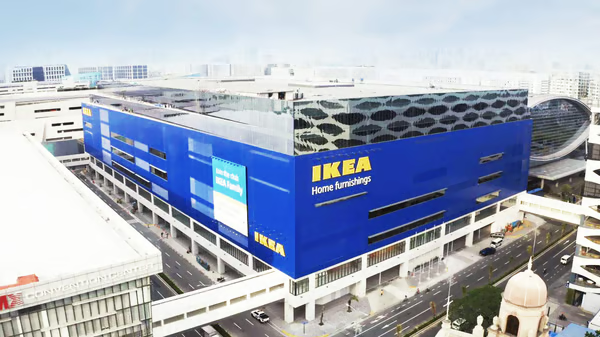
When IKEA Pasay City opened inside MOA Square, it quickly became more than a furniture store; it became an experience. Located at the Mall of Asia Complex, Marina Way, Pasay, and surrounded by a mall, convention center, and arena on three sides, the store occupies a massive, almost labyrinthine space.
The first time I entered, I got lost. The layout guides you through staged living rooms, kitchens, and bedroom spaces designed to look like ideal homes. Walking through them sparks reflection: you imagine your own space differently, compare, reconsider, maybe even dream bigger. Retail design here doesn’t just sell products; it sells aspiration.
In a country where many live in compact spaces, seeing efficient, aesthetic layouts feels both inspiring and slightly overwhelming. IKEA’s showrooms let you visualize a lifestyle that’s organized, stylish, and functional. It’s easy to linger. Couples pause to take photos. Families explain furniture features. Groups sip coffee in curated corners.
The food hall adds another layer. You line up, carry trays, choose dishes from Swedish-inspired offerings, and sit in a massive communal dining area. The experience is structured, social, and leisurely at once.
Pricing reflects the city’s diversity: some items are affordable, while others are clearly aspirational. This mix draws different income levels, uniting them in a shared, indoor environment where staying rather than rushing is encouraged. In a dense city like Manila, a well-designed space like IKEA becomes a rare form of leisure: orderly, aesthetic, and immersive.
Greenhills: Commerce with a Different Energy

Stepping into Greenhills Shopping Center feels different from MOA. It’s busier, louder, less polished, but undeniably alive. Located along Ortigas Avenue in San Juan City, Metro Manila, Greenhills is one of the city’s oldest malls, part of Manila’s retail landscape since the 1970s.
After redevelopment in the early 2000s, it now houses malls, shops, banks, theaters, restaurants, entertainment outlets, and even a 53-story residential condominium. Every day, around 100,000 people pass through its corridors.
The atmosphere is electric. Stalls display clothes, shoes, gadgets, and accessories. Haggling is part of the rhythm; even if you don’t buy any gadgets, you feel the pulse of commerce. Milk tea shops are everywhere, and my personal ritual is grabbing one before roaming, refreshing, affordable, and grounding in the chaos.
Greenhills blends informal commerce with organized mall spaces, creating a modernized public market inside a shopping complex. The soundscape shapes the experience: vendors calling out, music playing, overlapping conversations. Public life here is active, unfiltered, and dynamic.
This hybridity reflects Manila itself: formal malls coexisting with entrepreneurial stalls, order mixed with controlled chaos. Spending a few hours in Greenhills Mall teaches you more than shopping; it teaches you the rhythm of a city that thrives on negotiation, energy, and human interaction.
Azure: Vertical Escape

After long days navigating Manila’s energy, a place to rest becomes essential. One of my most memorable stays was at Azure Urban Resort Residences in Bicutan, Parañaque City. I’ve stayed here twice, once with my best friend, once with my partner and his family, and it’s flexible enough for any type of traveler.
We stayed on the 19th floor, and the balcony view stretched across the city. From above, Manila looks calmer. The clean, aesthetic rooms made it easy to unwind, while the residence-style setup, with pools, shared spaces, and resort-inspired interiors, gave a true urban escape without needing a traditional luxury hotel.
Because mid-range accommodations like Azure exist, even travelers navigating the Philippines on a budget can experience comfort without extreme spending. The property combines residential, retail, and leisure elements, reinforcing the mall-centered ecosystem that defines Metro Manila.
Designed by Broadway Malyan, Azure’s nine mid-rise towers are named after iconic beaches worldwide from Rio to Santorini, Boracay to Miami, each with tropical-modern aesthetics, natural ventilation, and sunlit spaces. Amenities include a man-made beach concept, the Azure Clubhouse, resort-style pools, key retail and service establishments, ample parking, and a pet-friendly, gated environment with 24/7 security.
Azure proves that urban life in Manila doesn’t have to be overwhelming. High above the city streets, you can pause, recharge, and still stay connected to the mall-centered rhythm of modern Metro Manila.
PITX: Even Transit Mirrors the Mall Model

Heading home after days of exploring Manila, we pass through the Parañaque Integrated Terminal Exchange (PITX). At first glance, it doesn’t feel like a traditional bus terminal; it looks like a mall. Bright, clean, and organized, with restaurants, shops, and waiting areas that make the hours before departure surprisingly pleasant. Pasalubong options for friends back home are everywhere, and you could easily spend time browsing while waiting for your ride.
Transportation hubs like PITX adopting mall-like designs are no accident. By creating enclosed, orderly spaces for high foot traffic, planners simultaneously improve safety perception and encourage spending. Modern infrastructure meets commerce here. You can grab a bite, shop for last-minute essentials, or simply rest in air-conditioned comfort before boarding your bus, taxi, PUJ, or future LRT connection.
Strategically located along Diosdado Macapagal Boulevard and CAVITEX, PITX connects Metro Manila to the South. It features a multimodal transport system, centralized boarding pass facilities, and first-world amenities designed for seamless commuting. Retail and service spaces coexist with transit operations, reflecting the same mall-centered ecosystem that defines Manila’s public life.
In Manila, even waiting for a bus becomes a communal, organized, and surprisingly comfortable experience. PITX proves that the principles behind malls’ accessibility, centralized convenience, and multifunctional spaces can extend far beyond shopping.
Why Malls Became Manila’s Public Squares

To understand Manila’s mall culture, you have to look at climate, urban density, and the city’s limited public spaces.
Metro Manila is hot, humid, and rainy much of the year. Outdoor public spaces, such as parks, plazas, and shaded walkways, are scarce relative to the population. Sidewalks can be inconsistent, and traditional town squares are limited. In response, private developers created climate-controlled, secure, and multifunctional spaces: the malls.
Malls offer features that solve everyday urban problems:
- Air-conditioned spaces for comfort during hot or rainy days
- Reliable security and safety
- Clean restrooms and free seating
- Variety of dining and retail options
- Entertainment, cinemas, and event spaces
- Accessibility and proximity to transportation
These features make malls comfortable places to linger. Filipinos don’t just shop, they meet friends, celebrate birthdays, have first dates, and spend hours together. In essence, malls have become de facto public squares: central gathering spots where community life unfolds.
Navigating the Philippines on a Budget Inside Manila

Manila can feel overwhelming at first: traffic, crowds, heat, but you don’t need to spend a fortune to experience it. From long trips from Oriental Mindoro to spontaneous mall visits, my best friend and I have learned that the city’s pulse is most accessible when you know where to go and how to move.
Exploring Manila doesn’t have to break the bank. You can:
- Browse shops without buying a thing
- Grab affordable meals or share portions with friends
- Use Grab or other rides strategically for safety and convenience
- Stay in mid-range residences instead of splurging on luxury hotels
- Spend hours in air-conditioned comfort, people-watching for free
- Try local snacks like Julie’s Bakeshop ube cheese loaf without overspending
- Visit attractions like IKEA or Greenhills for inspiration and browsing
Because malls consolidate shopping, dining, and entertainment under one roof, they cut down on the time, money, and stress of moving around the city. Budget travel isn’t just about finding the cheapest option; it’s about making smart choices. In Manila, the smartest choices often start inside a mall.
Understanding the Philippines on a Budget Through Manila

When people mock Filipino mall culture, they often miss the structural realities that make it thrive. Manila’s malls feel like public squares because they perform the functions public squares traditionally served: gathering, shelter, social exchange, and celebration. They exist at the intersection of climate, density, commerce, and culture.
For travelers navigating the Philippines on a budget, malls offer something invaluable: accessible participation in city life. After six to seven hours of travel from the provinces, stepping into that cool, air-conditioned space feels less like entering a shopping center and more like entering the heartbeat of Manila itself.
Pro tip: Plan your visits around mall events or food promotions to save money while experiencing local culture firsthand. Grab a milk tea, wander the floors, and let the space guide your exploration.
Have you experienced Manila’s mall culture yourself? Drop a comment below and share your favorite spots, food finds, or surprising discoveries. You never know who you might inspire to explore next!
FAQs About Navigating Manila on a Budget
1. What’s the best time of day to explore Manila to avoid traffic?
Morning hours (around 7–10 AM) are generally easier for getting around, especially on main roads. Late afternoons (4–7 PM) often see heavy traffic as workers head home. Planning mall visits outside rush hours can save time and reduce stress.
2. Are there budget-friendly alternatives to Grab or taxis?
Yes! Jeepneys and UV Express vans are cheaper options for short distances, but they can be crowded and less predictable. For first-time visitors, app-based rides like Grab are safer and more convenient, even if slightly more expensive.
3. Can I bring my own snacks into malls?
Generally, small personal snacks are fine, but consuming large meals inside food courts is expected to be from mall vendors. Bringing water bottles or light snacks for children is usually acceptable.
4. Are there budget-friendly lodging options near the malls?
Yes! In addition to mid-range residences like Azure Urban Resort, hostels, boutique hotels, and Airbnb options are available near MOA, Greenhills, and Pasay. Staying near malls can reduce transportation costs and make city exploration easier.
5. Is it safe to explore Manila malls alone as a first-time visitor?
Yes. Major malls are generally safe, well-lit, and patrolled by security personnel. Standard precautions still apply: keep personal belongings secure, and avoid empty corridors late at night.