Island Healing Wellness Philippines: The Ancient Soul Reset


Imagine trading your morning alarm for the rhythmic pulse of the Pacific and your caffeine jitters for the grounding warmth of virgin coconut oil. Finding the perfect island healing wellness in the Philippines experience isn’t just about a tropical vacation; it is a profound biological and emotional recalibration.
In this guide, we delve into how the Philippines’ 7,641 islands offer a unique “Ginhawa” (total well-being) that combines “Blue Mind” ocean therapy, traditional Hilot healing, and a surprising perspective on jet lag. Whether you are a burnt-out digital nomad or a couple seeking a deeper connection, you will leave this page with a roadmap to the world’s most authentic reset.
Island Healing in the Philippines: A Different Kind of Reset
You do not always need a high-priced retreat to reset. Sometimes, you simply need a landscape that refuses to hurry. This is the essence of island healing wellness in the Philippines. It isn’t packaged as a rigid program or a set of chores you check off a list. Instead, it happens quietly, through the salt air, the unhurried pace of coastal life, and the ancestral wisdom of the people.
Most people associate “wellness” with structured silence or clinical spas. But here, healing is a “Blue Mind” experience—a term marine biologists use to describe the meditative state we enter when near water.
You arrive tired, often carrying the “Red Mind” of city anxiety, but the islands invite you to move with your discomfort rather than fight it. Days stretch, nights soften, and without effort, your body begins to harmonize with the tides.

What Is Island Healing, Really?
Island healing is a potent trifecta of nature, rhythm, and culture. Unlike Western wellness trends that rely on expensive gadgets or strict routines, Philippine island life is guided by the environment. The sun determines your wake-up call. The tropical heat encourages a mid-afternoon pause. The ocean becomes your primary therapy room.
The Philippines offers a space where there is zero pressure to “optimize” your time. In a world obsessed with productivity, the simple act of existing without an agenda is radical. This is not a dramatic, overnight transformation; it is a subtle, steady, and deeply effective realignment of your nervous system.
The Ocean Effect: Why Water Changes Everything
There is a biological reason why you feel a “clunk” of relaxation the moment you see the sea. Coastal environments—”blue spaces”—are proven to reduce stress more effectively than green spaces alone. In the Philippines, the ocean is a constant companion. You hear it in the distance, you smell the salt on the breeze, and you are perpetually drawn back to its edge.
Snorkeling, Floating, and Letting Go
When you float in the buoyancy of the Sulu Sea, your body experiences a weightlessness that mimics the womb. Snorkeling creates a unique sense of sensory immersion. Your focus narrows to the rhythm of your own breath through the snorkel and the vibrant dance of the reef below. Your thoughts quiet down. You become present in a way that is nearly impossible to replicate in a gym or a yoga studio.
Studies on ocean exposure show that the negative ions in sea air improve our ability to absorb oxygen and balance serotonin levels. You aren’t just “relaxing” on a beach; you are undergoing a chemical shift that lowers cortisol and boosts mental clarity.

Time Zones, Jet Lag, and the Unexpected Upside
We usually treat jet lag as a traveler’s tax—a miserable period of brain fog. But in the context of island healing, that 12-hour flip is your secret weapon for a “hard reboot”.
When you arrive, your old routine is shattered. You wake up at unusual hours, often before dawn. Instead of fighting this, lean into it. Waking up at 4:00 AM on an island means you witness the “First Light,” a time of day when the air is coolest, and the energy is most serene.
Exposure to intense tropical sunlight early in the morning regulates your circadian rhythm faster than any supplement. By the time your body “aligns” with the local time, you have naturally shed the rigid, stressful habits of your home life.
Slow Living Isn’t a Trend Here; It’s a Lifestyle
In the West, we “try” to practice slow living. In the Philippines, it is simply the default setting. Meals take as long as they need to. Conversations are unhurried. This “no-rush” culture is a psychological balm for anyone suffering from “hurry sickness.”
The Psychology of Surrender
Constant busyness keeps our bodies in a state of high-alert. When you move to the “island clock,” your sympathetic nervous system (fight or flight) finally hands the reins over to the parasympathetic system (rest and digest). You may intend to do five things in a day, but you often end up doing one—and feeling infinitely better for it.

Traditional Healing Practices: The Wisdom of Hilot
While nature does the heavy lifting, the cultural practice of Hilot provides the finishing touch. Hilot is an ancient Filipino healing art that focuses on restoring the body’s “Ginhawa” (total well-being) through intuitive touch.
Unlike a standard Swedish massage, a Manghihilot (healer) doesn’t just work on muscles; they work on imbalances. They use warmed banana leaves to identify areas of energy blockage and virgin coconut oil infused with medicinal herbs to soothe the soul. It is an experience of being “seen” and “balanced” rather than just rubbed down.
Food as Healing: The Island Plate
Island food is naturally anti-inflammatory. It is fresh, simple, and stripped of the processed additives that cloud our minds.
- Seafood: Caught that morning and grilled over coconut husks.
- Tropical Fruits: Mangoes, papayas, and mangosteens that are bursting with live enzymes.
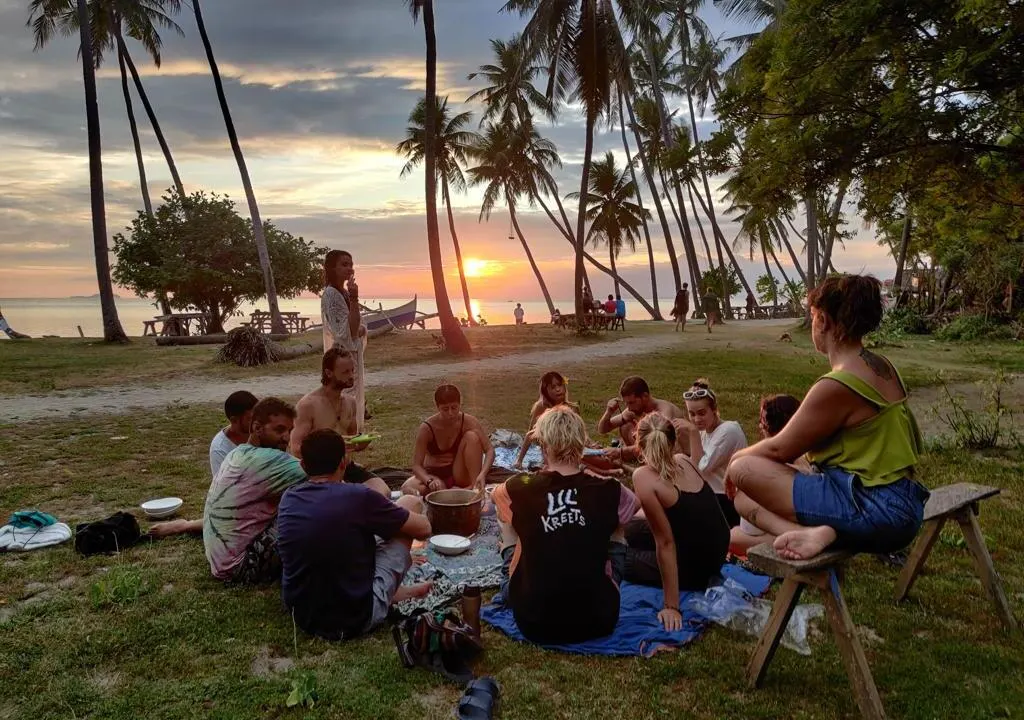
- The Boodle Fight: A communal feast where food is served on banana leaves and eaten with hands. This practice fosters “Kapwa” (shared identity), proving that social connection is as vital to wellness as nutrition.
Community, Warmth, and Emotional Wellness
Wellness is not just a solo mission; it is emotional and social. The Philippines is world-renowned for its hospitality. The genuine warmth of the locals creates a “psychological safety net.”
Simple, unplanned interactions—a shared laugh with a fisherman or a conversation at a local market—remind you of the value of human connection, something often lost in the digital “scroll-hole” of modern life.
Where to Experience Your Reset
Different islands offer different frequencies of healing. Which one calls you?
- Siargao: The capital of “Slow Life.” Perfect for those who find healing through movement, surfing, and a vibrant community of like-minded nomads.
- Palawan: The “Last Frontier.” Best for deep nature immersion. The limestone lagoons of El Nido offer a sense of quiet isolation that feels like another world.
- Cebu & Bohol: A perfect balance. You get the comfort of modern amenities alongside the lush “forest bathing” opportunities of the Chocolate Hills.
- Siquijor: The “Mystic Island.” Known for its traditional herbalists and ancient healing traditions, this is the place for those seeking the spiritual side of wellness.
Is Island Healing Right for You?
You don’t need to be a yoga expert or a millionaire to experience this. Island healing is for the digital nomad seeking balance, the student needing a break from the grind, and the couple wanting to reconnect.
Common Concerns Addressed:
- Connectivity: Hubs like Siargao and Cebu now offer Starlink, making “work-from-paradise” a reality.
- Safety: The culture of Kapwa ensures that travelers are treated like family.
- Budget: From beach huts to luxury eco-resorts, the Philippines accommodates every wallet.
You Don’t Just Visit; You Return Changed
The Philippines does not force you to heal. It simply creates the perfect conditions for your body and soul to do what they already know how to do. You aren’t just taking a vacation from your life; you are recalibrating your entire being so you can return to your world with a “Blue Mind” and a lighter heart.
Are you ready to trade your screen for the sea? Tell me in the comments: would you choose an ancient Hilot session over a traditional spa day?
FAQs
1. Do I need a wellness retreat to experience island healing in the Philippines?
No. Island healing happens naturally through the environment, culture, and pace of life, even without structured programs.
2. Is the Philippines suitable for long stays or remote work?
Yes. Many islands, especially Siargao and Cebu, offer reliable internet, coworking spaces, and a strong digital nomad community.
3. Is it safe to travel around the islands?
Popular destinations are generally safe for travelers. Basic precautions and local guidance are always recommended.
4. When is the best time to visit for wellness travel?
The dry season (November to May) offers the best weather for outdoor activities and island exploration.
5. Is island travel expensive in the Philippines?
It can suit different budgets. You can find both affordable stays and high-end resorts, depending on your preference.