Local Experiences Philippines: Baguio City’s Uphill Truths

Have you ever arrived somewhere excited, only to realize five minutes in that your calves are already burning?
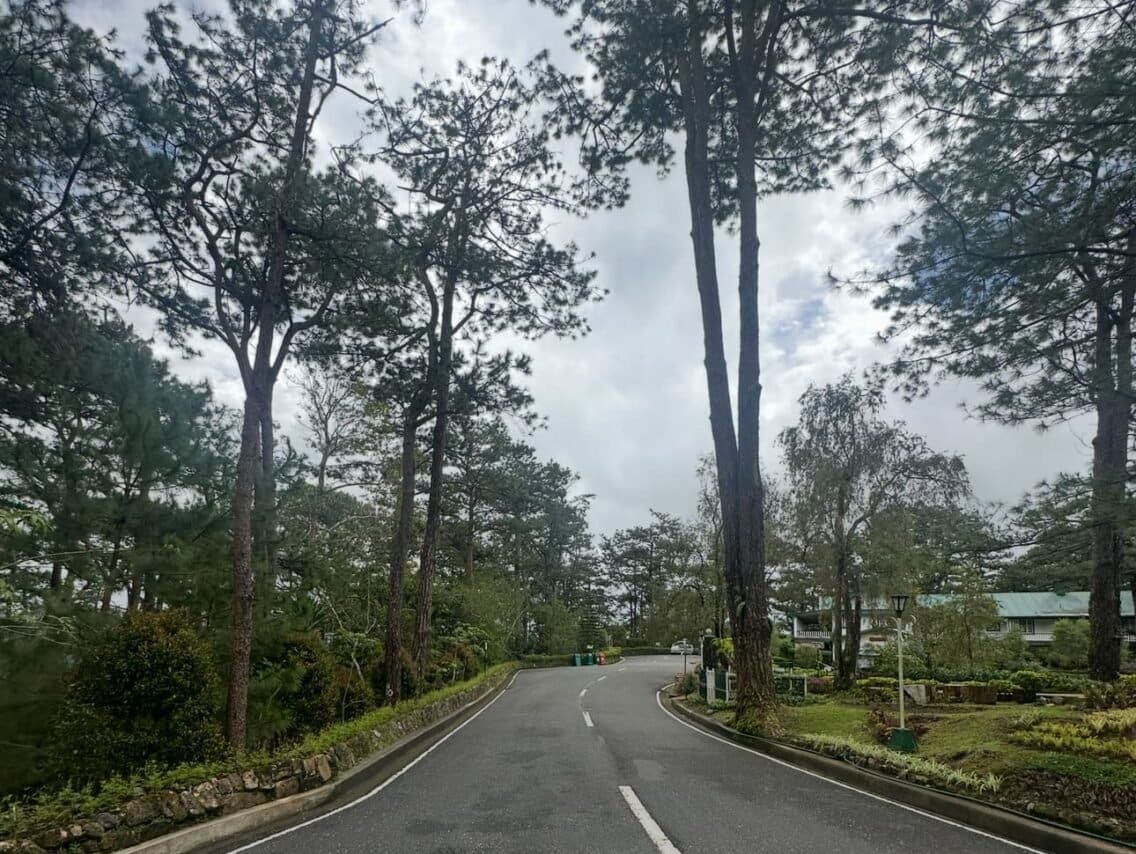
That was me in Local experiences Philippines, specifically in Baguio City, standing at the bottom of yet another incline, pretending I wasn’t slightly out of breath. I thought I was prepared. I had layered clothes, a fully charged phone, and a camera roll waiting to be filled. What I didn’t prepare for was the terrain. In Baguio, you don’t stroll. You climb.
And somewhere between those climbs, I realized the city was teaching me something.
Baguio City: Local Experiences Philippines

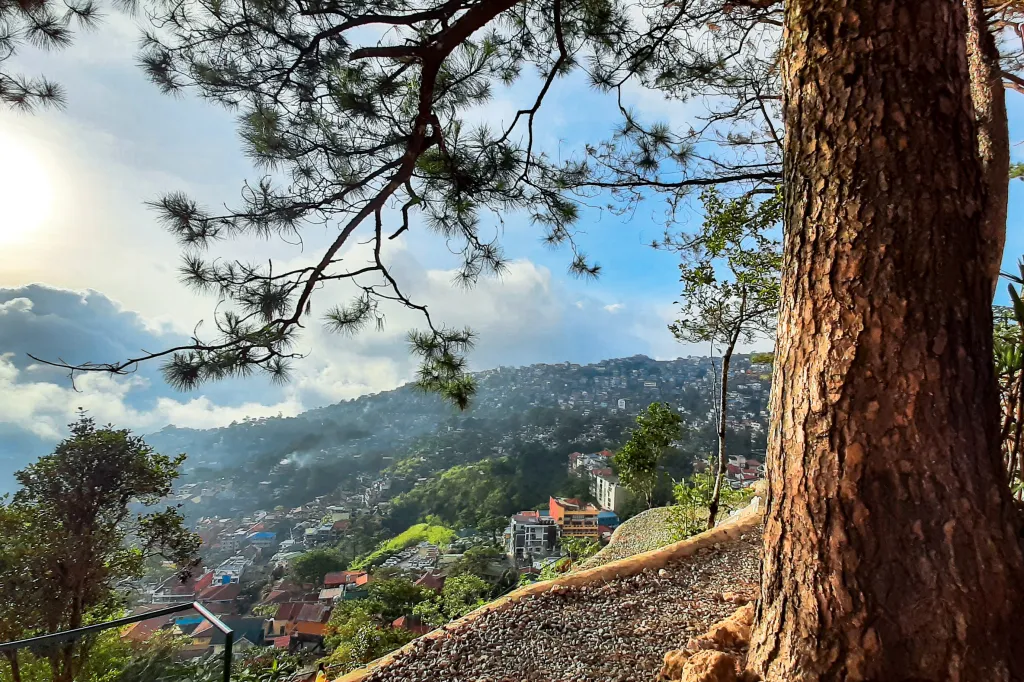
Baguio, the “Summer Capital of the Philippines,” isn’t just a cool escape from the lowlands; it’s a city that invites you to explore, reflect, and move at its own pace. Nestled in the mountains of Northern Luzon, its pine forests, rolling hills, and layered gardens make every walk feel like a small adventure.
The city is rich in culture and history, from the Baguio Cathedral to Session Road, and showcases the vibrant Igorot heritage. Local flavors from strawberry taho to Baguio longganisa make wandering the markets just as rewarding as visiting scenic spots. Festivals, arts, and crafts fill the streets with color and life, while the cool climate keeps you alert and present.
Even short strolls here feel like part of a larger journey. Every incline, every corner, becomes a reminder that Baguio is best experienced with attention and curiosity.
The Journey From Oriental Mindoro: Effort Starts Early

Before the pine trees and cool air, there was exhaustion. Coming from Oriental Mindoro meant a 2–3 hour ferry to Batangas, then a long bus ride. My best friend and her sister joined me, and we met our tour group at SM Mall of Asia that night, strangers sizing each other up, ready for the road ahead.
Four more hours passed. Sleep was fitful. Necks stiff. Hunger gnawed. Yet, the climb had already begun. Physical effort stripped away small talk and made conversations honest. By dawn, a quick stop in Pangasinan for silogs and coffee reminded me that rest resets perspective.
Travel tip: Trips from southern Luzon to Baguio combine sea, highway, and mountain roads. Budget energy as carefully as you budget money.
Baguio Cathedral of Our Lady of the Atonement
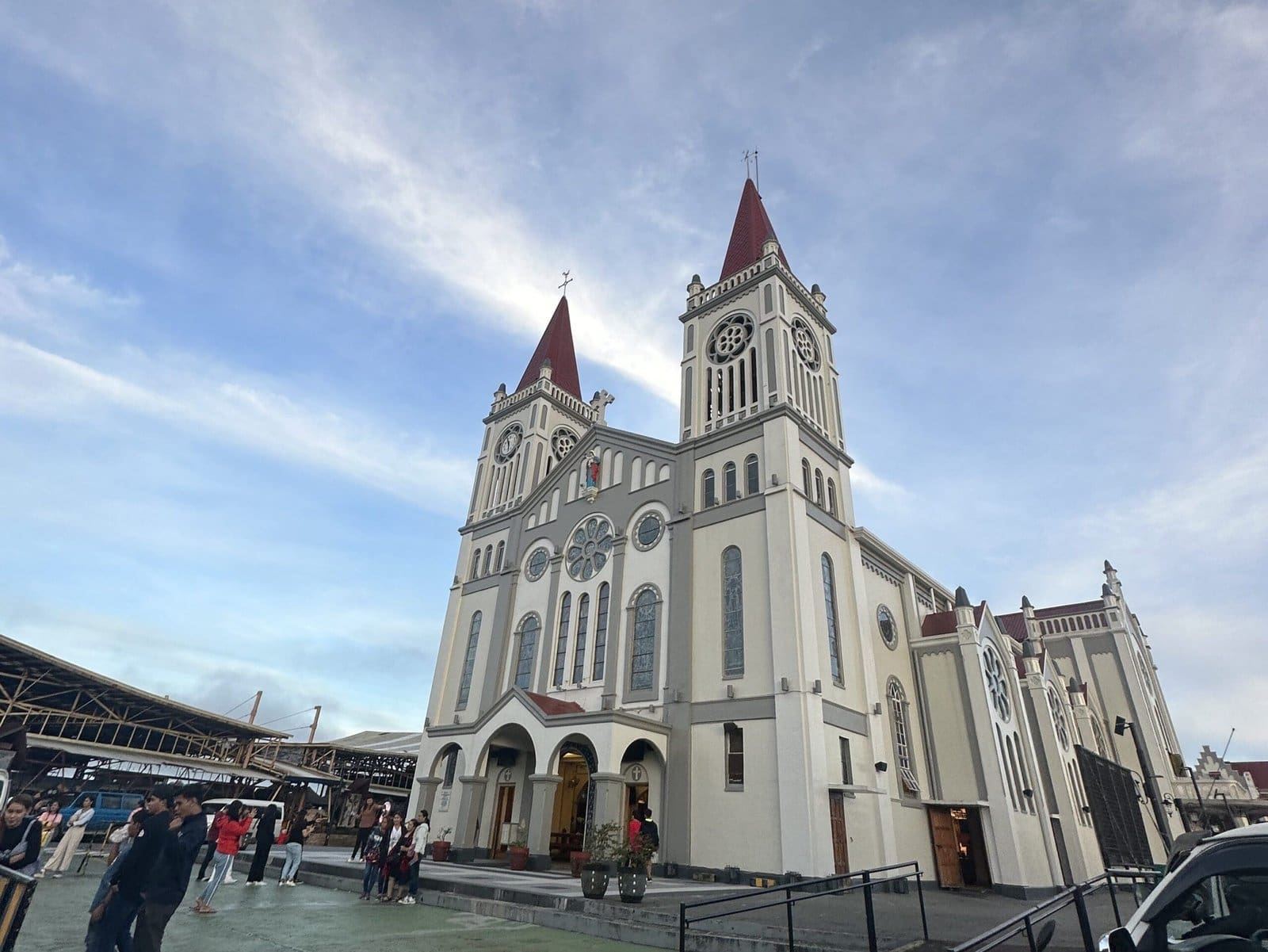
Perched on Cathedral Hill (Cathedral Hill, 2600 Baguio City, P.O. Box 44, Benguet), the Baguio Cathedral has been a landmark of the Roman Catholic Diocese of Baguio since 1908. Its Parish Fiesta is celebrated every 9th of July.
We arrived by van, winding up the steep hill, so no climbing was needed, but the sense of elevation hit immediately. The cool mountain air was a refreshing change after the long bus and ferry ride. Tired, wrinkled, and slightly disheveled, we still couldn’t resist seeing the cathedral.
Its towering arches stand with quiet confidence. Even without climbing steps, reaching this spot felt earned. The effort of travel, early mornings, and patience on winding roads made the view meaningful. Outside, we treated ourselves to the famous strawberry taho (silken tofu with sweet syrup and tapioca pearls), a small reward that made the journey sweeter.
Baguio Botanical Garden
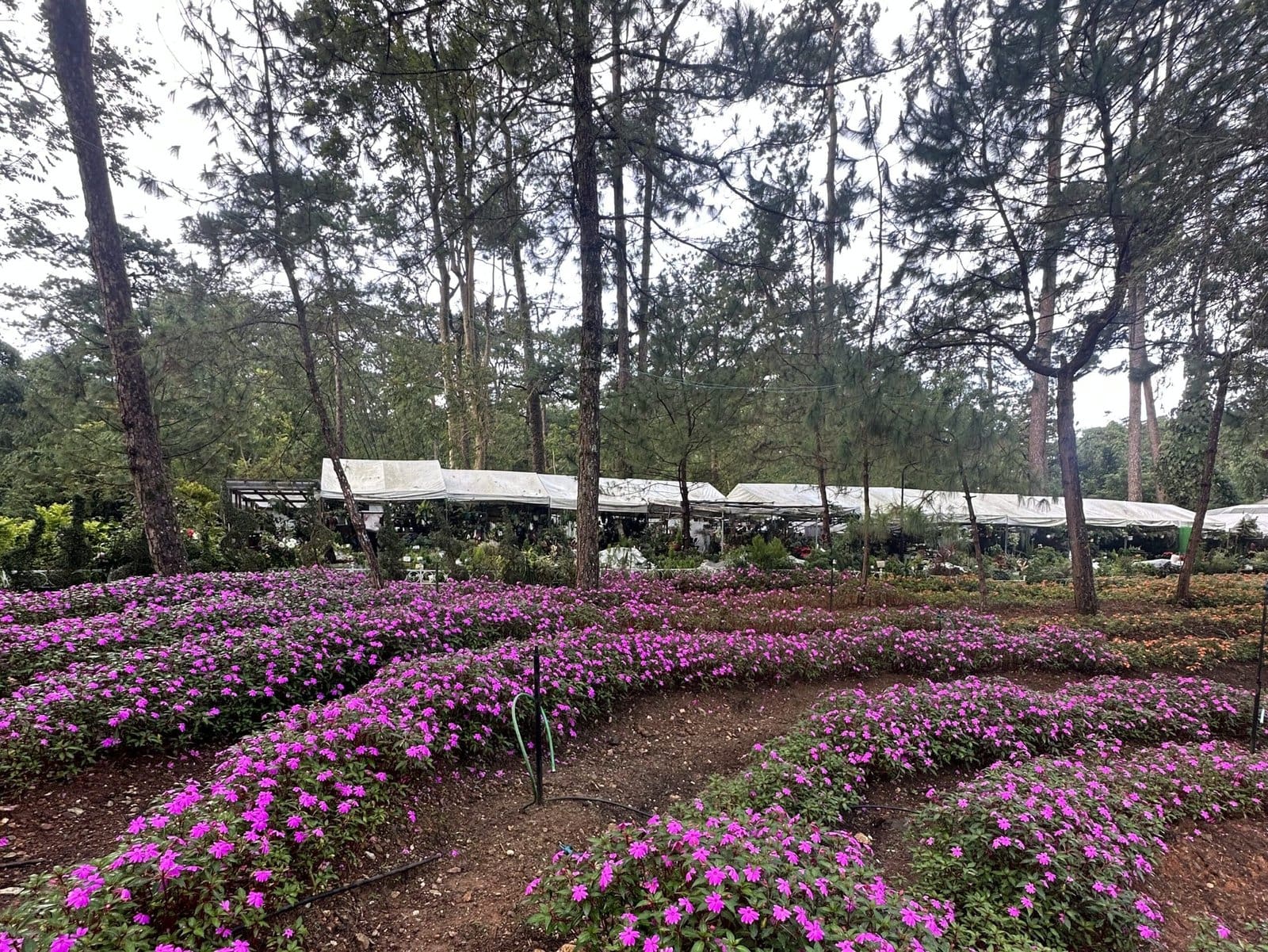
We stopped at the Baguio Botanical Garden along Leonard Wood Road, a peaceful spot full of flowers, terraces, and cultural displays inspired by Igorot heritage. Formerly Imelda Park, it was once a zoo and was renovated in 2021.
We roamed among vibrant flower gardens, sipped coffee, and shared churros while enjoying the cool air. The garden’s layout mirrors Baguio’s slopes, plants cling to inclines, and paths wind gently uphill. It’s a quiet reminder that growth often requires effort.
Entrance fee: ₱100 for tourists 13+, ₱25 for kids under 12, with discounts for seniors and PWDs. Shoes with grip help if the soil is damp.
Even a short stroll here makes you slow down, notice the details, and appreciate how nature and culture adapt to the hills.
Wright Park
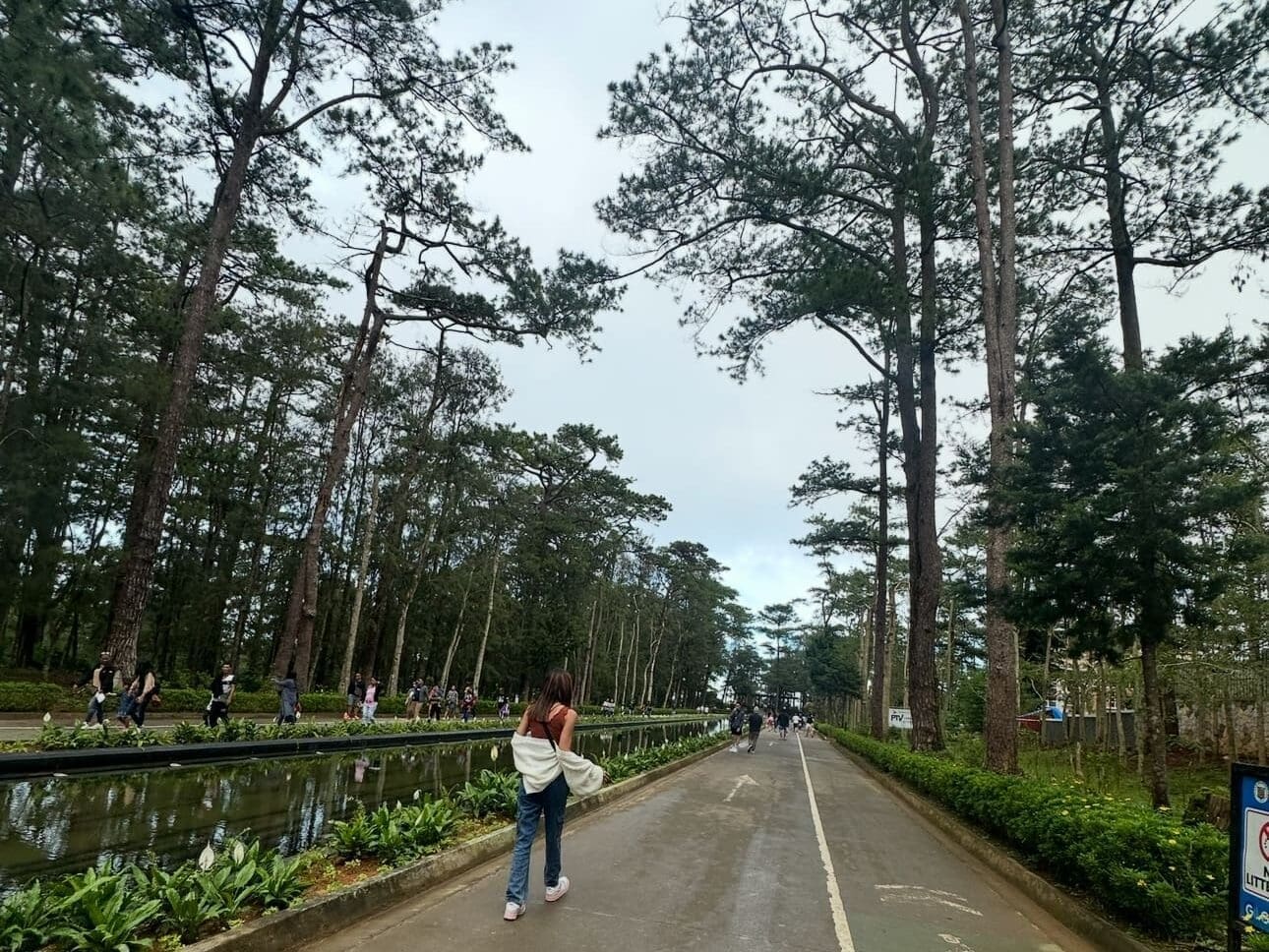
Wright Park is famous for its cool breeze, scenic views, and horseback riding, and it doesn’t disappoint. The park’s main feature, the Riding Circle, stretches like two long parallel hallways with a pool of water in the middle, almost like a runway as you walk along. It’s easy to underestimate the gentle uphill paths, but the fresh mountain air keeps you aware and present.
We wandered freely, took photos with the park’s famous Great Bernard dog, and watched children giggle on horseback while couples posed for pictures. No entrance fee is required, which makes it even more inviting.
The park may look ordinary at first glance, but the combination of open space, breezy air, and lively activity gives it a special energy unique to Baguio.
Mines View Park
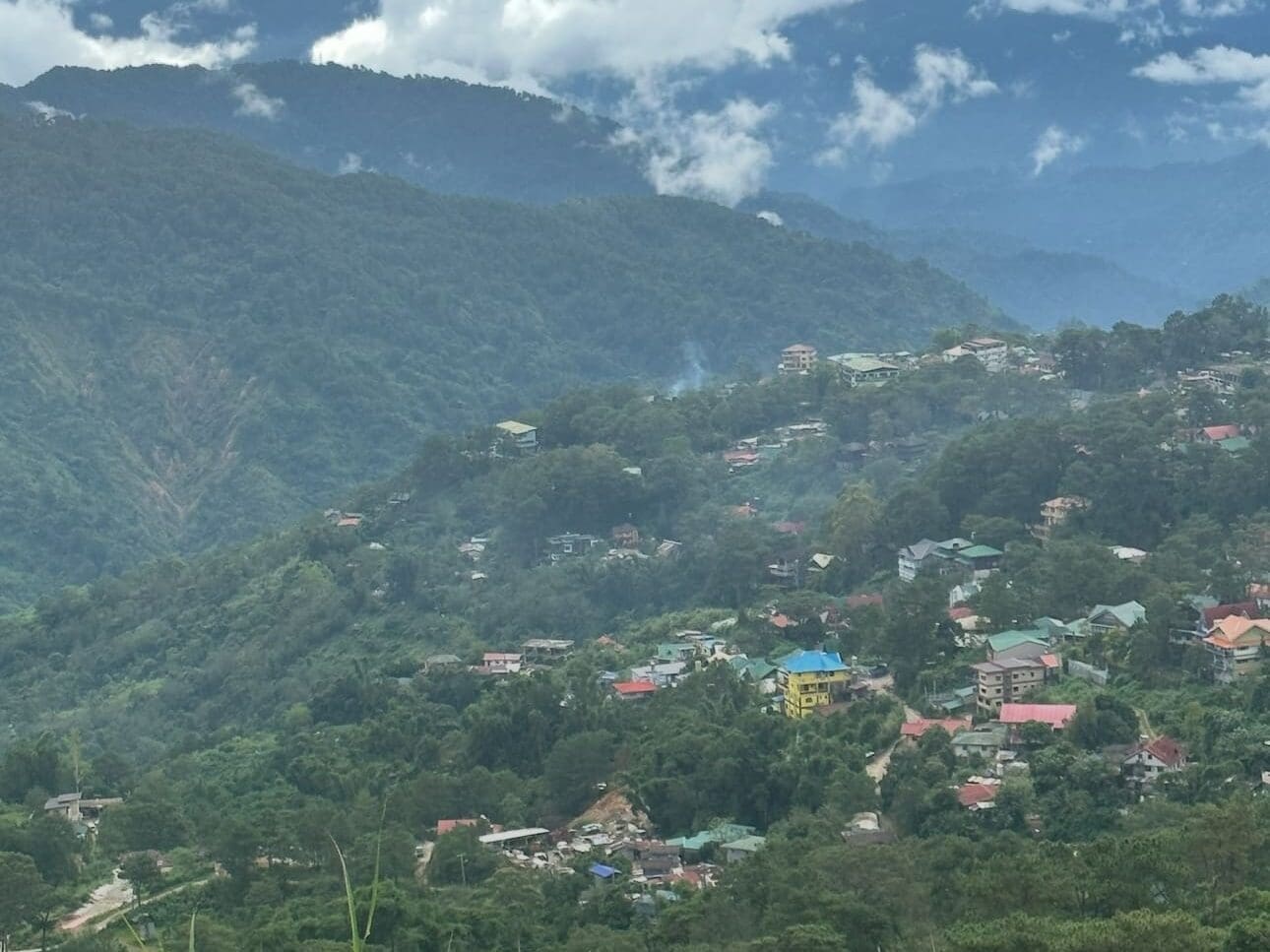
Mines View Park is a must-visit for its breathtaking views of Benguet’s mountains and abandoned copper mines. From the viewing deck at its peak, you can see Baguio City sprawling below, framed by valleys and distant mountain ranges, while the breeze feels sharper up here.
We navigated through the throngs of tourists, snapping photos, buying souvenir clothes, and tasting local treats. Even with the crowd, the elevation gives perspective—literally and figuratively. At a higher altitude, the wind carries farther, and the city’s noises fade, reminding you to pause and soak it all in.
There’s no entrance fee, but an environmental contribution is requested: ₱10 for adults, ₱5 for kids. Standing there with friends, overlooking the city below, made the moment feel personal and memorable, a shared pause above Baguio.
Camp John Hay
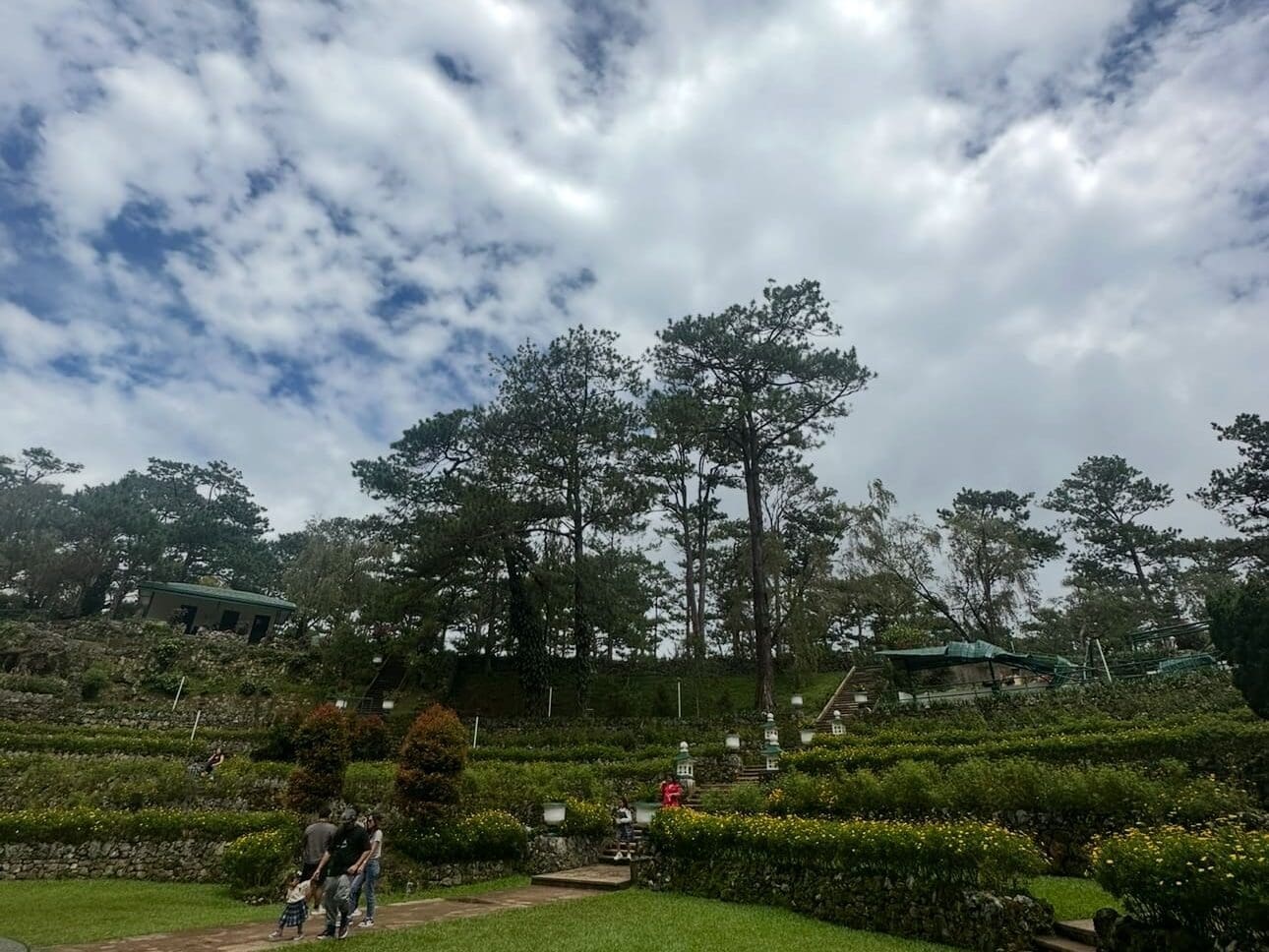
Next, we visited Camp John Hay, a former U.S. military rest and recreation facility that now blends history, pine forests, and commercial spaces. Walking among the towering trees, the crisp scent of pine immediately refreshed us. Locals jog and run here regularly, and it’s easy to see why the open trails and cool air make every step feel energizing.
The Country Club Village sits elevated and quiet, giving a sense of calm as the city noise fades below. Historical markers, the Bell Amphitheater, and the Secret Garden hint at the camp’s past as a military post and sanitarium for American troops, offering a glimpse into its century-old stories while you stroll.
Even though the terrain here is gentler than other parts of Baguio, occasional inclines keep you engaged and aware of the surrounding forest. Entrance fee is ₱85 per person. For a mix of nature, history, and calm reflection, Camp John Hay feels like a little escape within the city.
Burnham Park
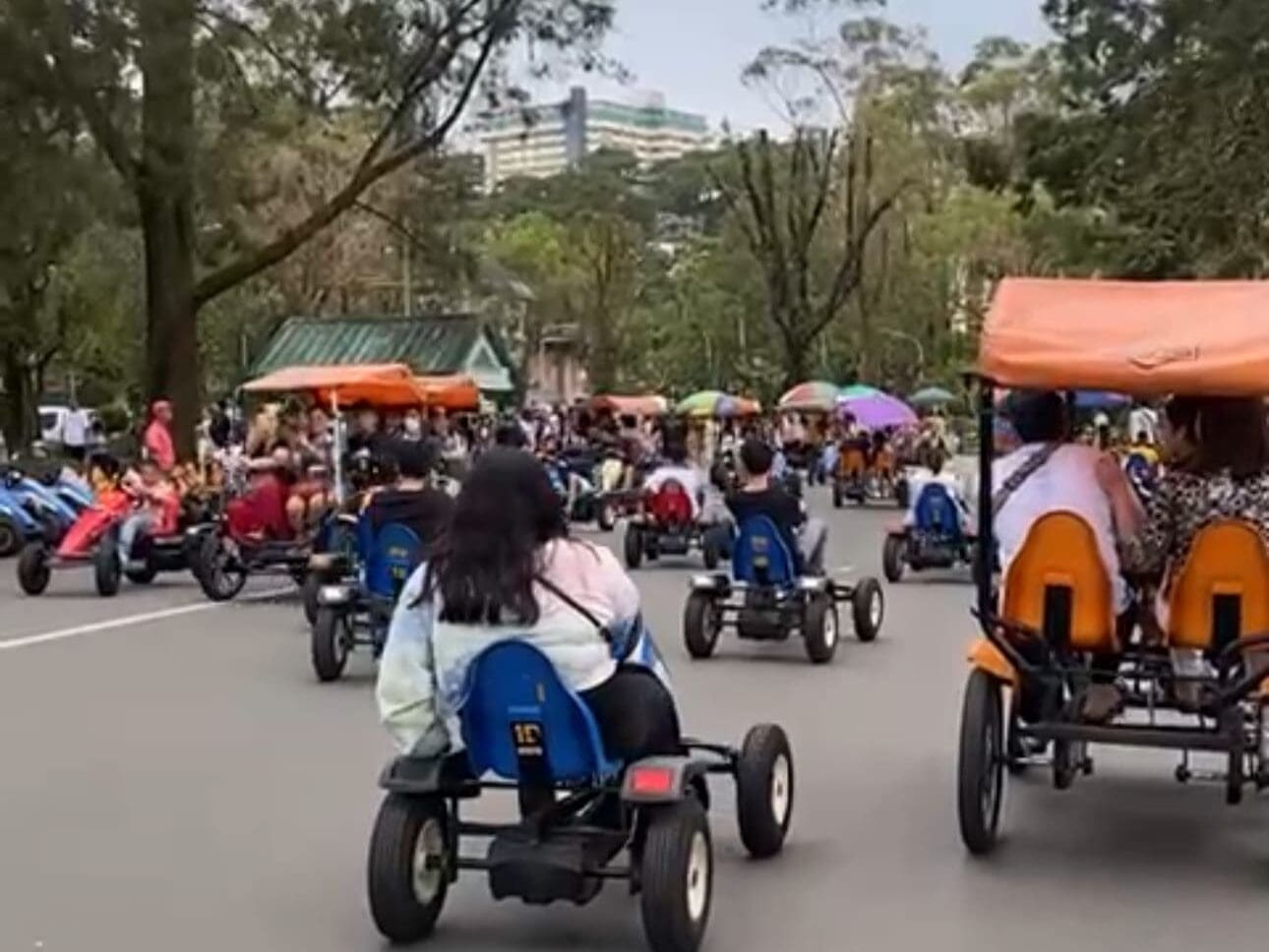
By night, Burnham Park softens into a calm, luminous space. Lights reflect on the lake, families stroll, and couples sit on benches. After a day of climbing Baguio’s hills, the park’s flat paths feel like a luxury.
We rented a bike (₱50–₱125 per half-hour) and rode together, my best friend, her sister, and her son, laughing as we pedaled around the lake. When night darkened, we stayed, sat down, and shared stories with snacks. The air grew colder, making the warmth of conversation and laughter even more comforting.
Named after American urban planner Daniel Hudson Burnham, the park blends sprawling gardens, scenic pathways, and a tranquil lake at its center. Whether biking, strolling, or simply watching life unfold, Burnham Park captures Baguio’s cool charm and lively spirit, making it a favorite for both locals and travelers alike.
SM City Baguio
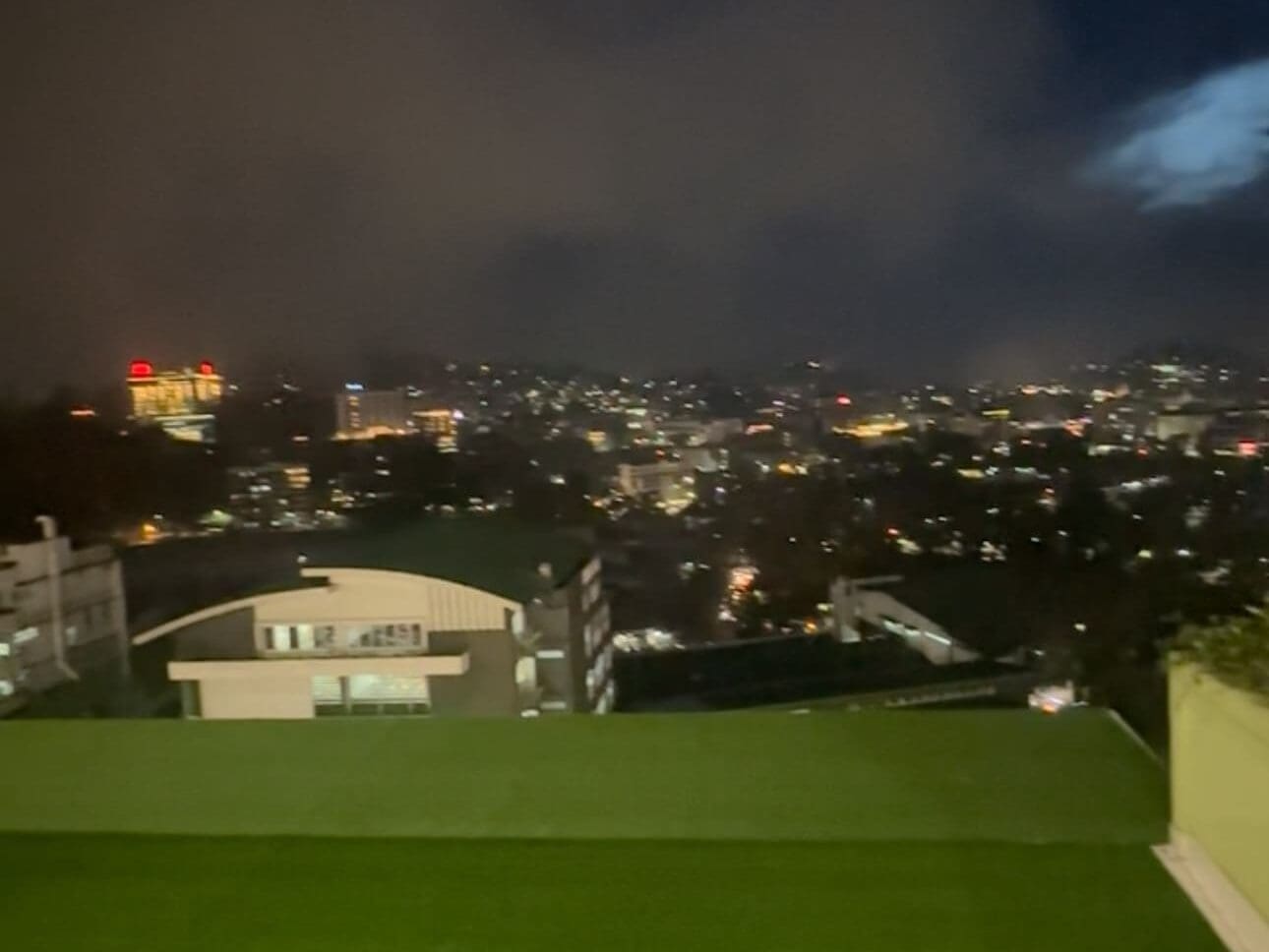
For dinner, we decided to eat at SM City Baguio (Luneta Hill, Upper Session Road). Unlike most malls, it has open-air sections that let wind and fog filter through, and the architecture works with the slope instead of flattening it. Modernity here cooperates with geography rather than trying to dominate it.
From Burnham Park, you can see the mall in the distance, but don’t be fooled, it’s not exactly walking distance! We took a minibus instead. Inside, the place was busy and lively. We ordered food, ate, and relaxed while enjoying the fascinating night view of Baguio spreading below. Even a simple dinner felt elevated with the city lights shimmering in the cool mountain air.
Mall hours run 10:00 AM–9:00 PM (Mon–Thu), extending to 10:00 PM on weekends.
Session Road
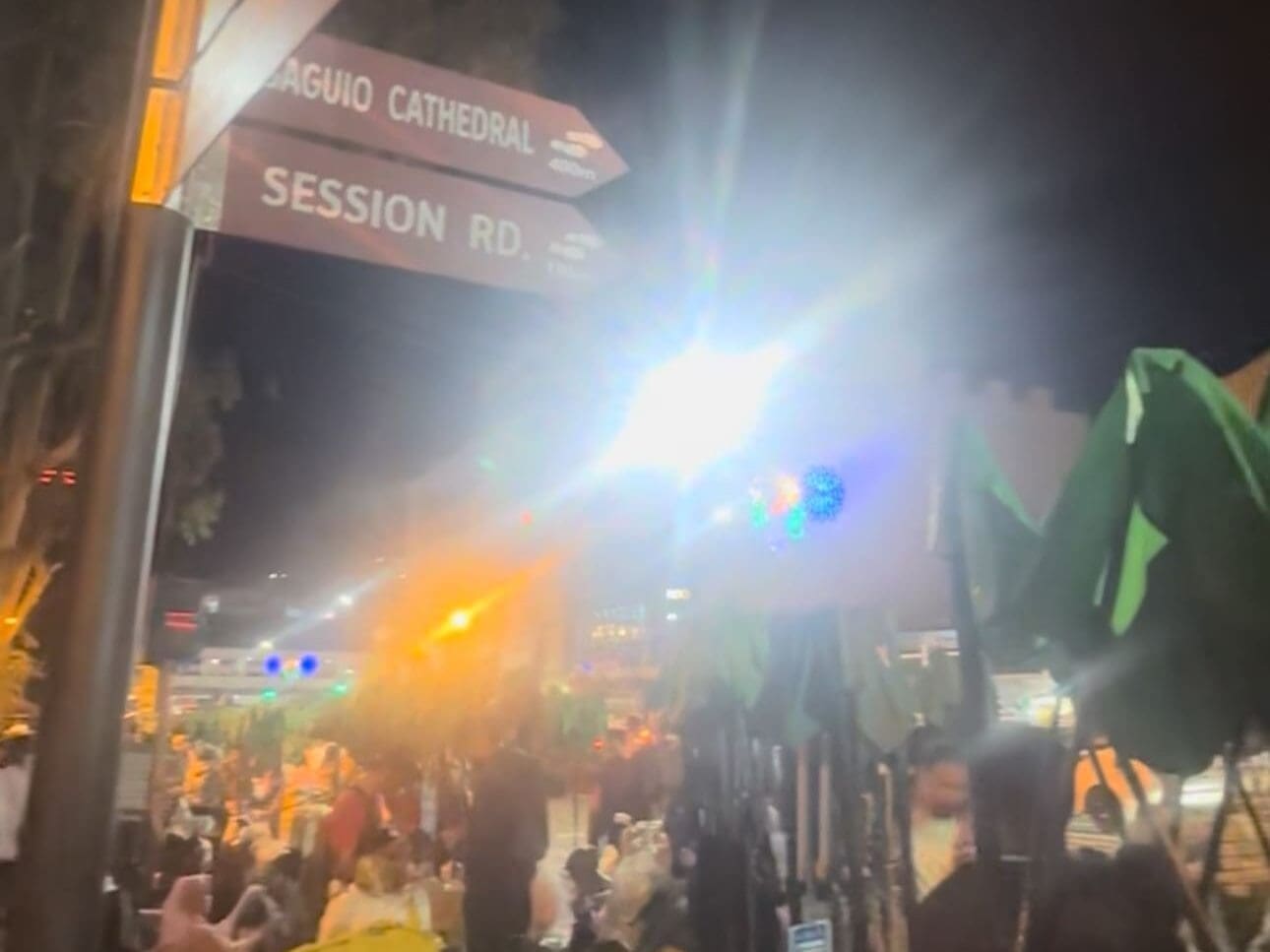
Walking along Session Road at night feels like stepping into the city’s heartbeat. Restaurants spill onto sidewalks, street performers gather small crowds, and vendors fill the busy lanes. By 9 PM, the night markets come alive, offering street foods like grilled skewers, milk tea, pastries, and small souvenirs as proof of our presence in the City of Pines.
We strolled together, matching each other’s pace, me, my best friend, her sister, and her son. Uphill or downhill, no one walks alone in Baguio. The shared effort of navigating the slopes naturally built empathy and laughter.
Session Road isn’t just a street; it’s a living timeline. Originally designed as Government Center Road for American colonial officials, it evolved into a bustling hub of shops, eateries, and cultural activity. From hunting for ukay-ukay (thrift clothes) treasures to people-watching from a café, every corner tells a story. Experiencing it at night, with the air growing cooler and the city lights sparkling, reminded me that the pulse of Baguio is both energetic and intimate, especially when shared with friends.
Diplomat Hotel
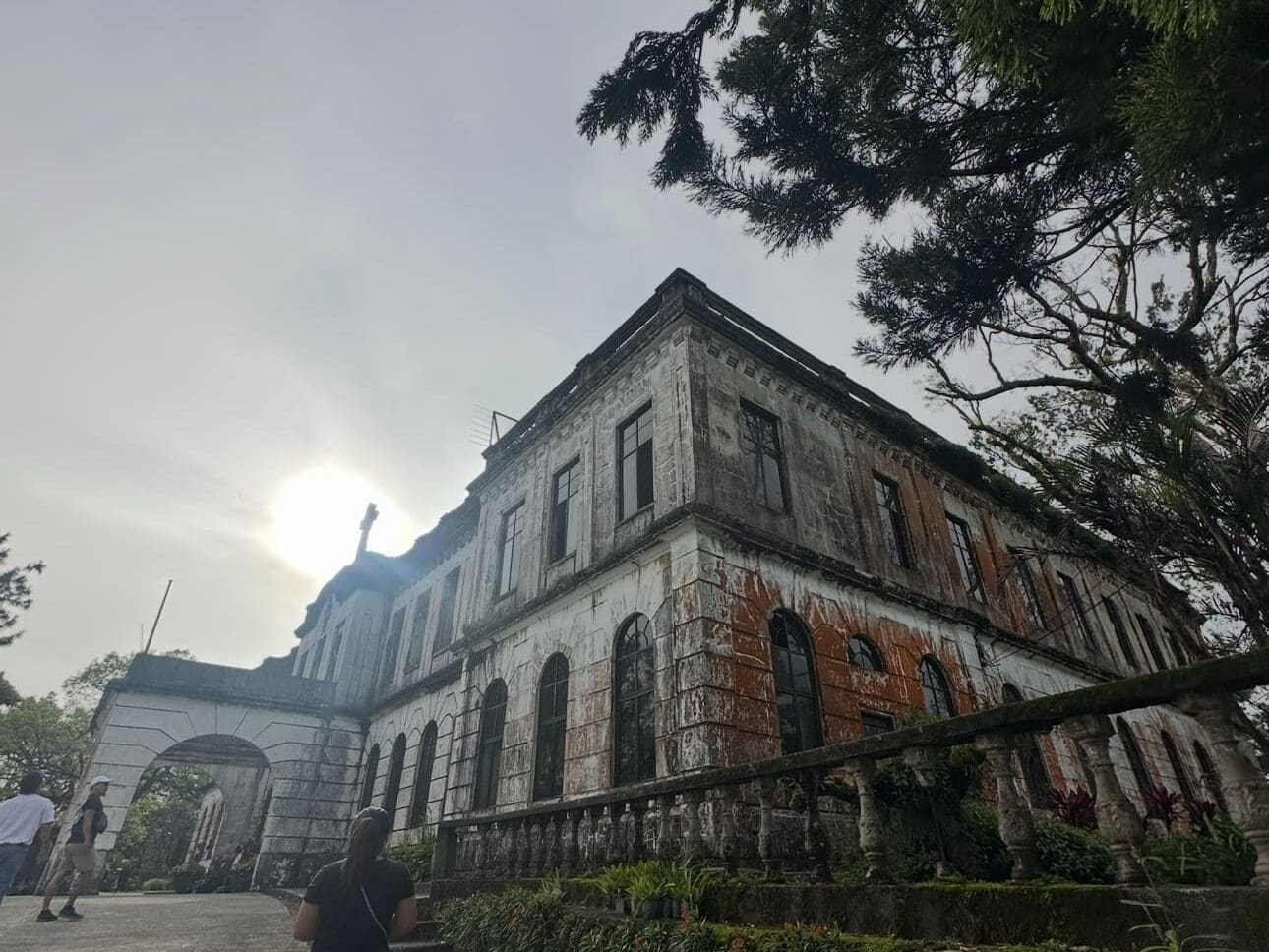
The next morning, we visited the Old Diplomat Hotel, perched on Heritage Hill. Originally built in 1913 as a Dominican vacation house and later converted into a school and hotel, the ruins now stand with quiet authority over the city. Stories of hauntings float around, but what struck me most was the endurance of concrete walls weathering storms and decades, reminding me that resilience often leaves visible marks.
Climbing up to the ruins felt heavier, not in steps, but in reflection. History weighs differently than scenery. Standing there, I could almost sense the generations that passed through, the laughter, the quiet moments, and the lingering presence of the past.
Entrance fee is minimal: ₱10 for adults and ₱5 for children. Even in decay, the Diplomat Hotel teaches that survival and strength are often inseparable from time and memory.
Bell Church
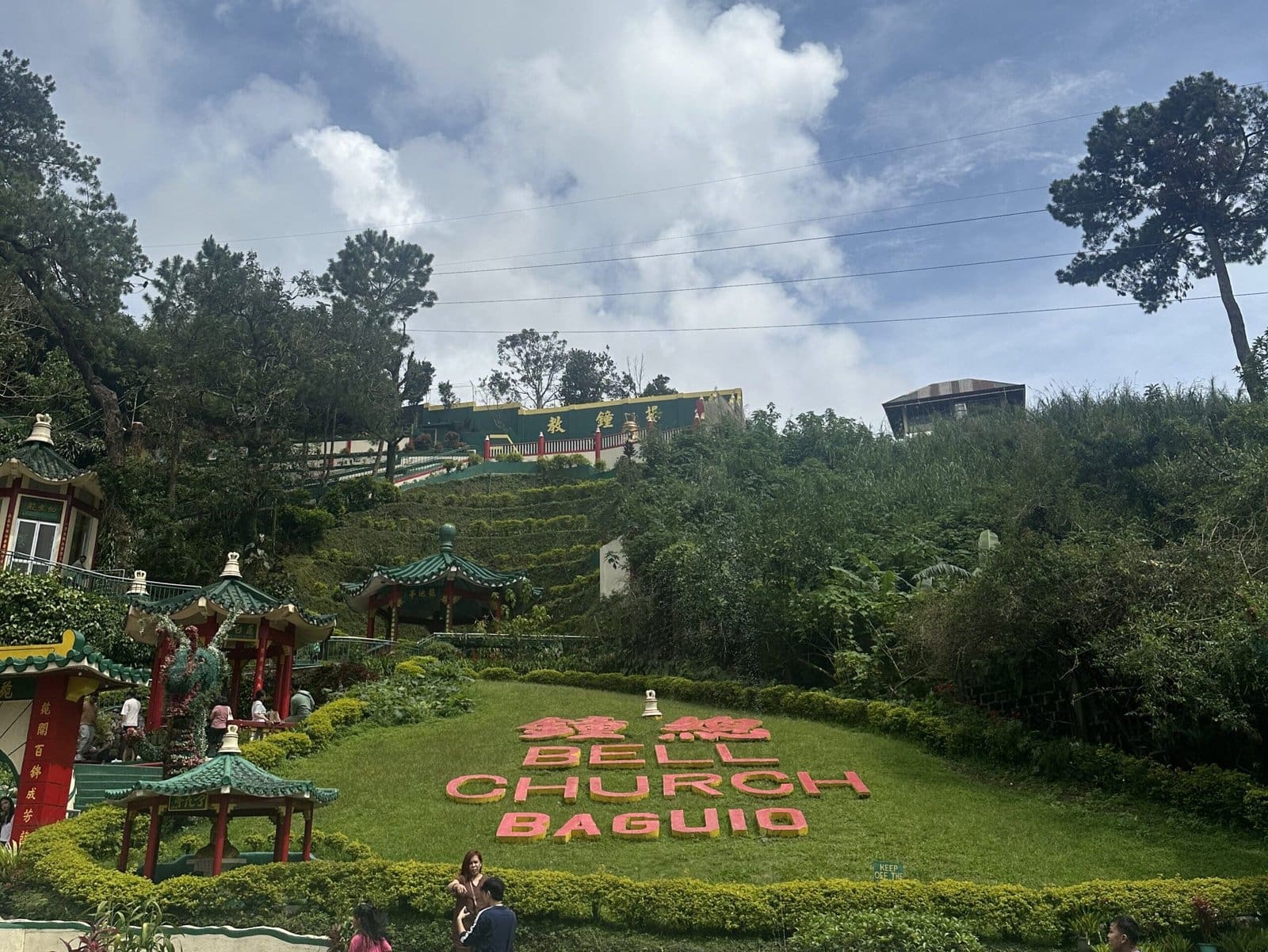
Our last stop was Bell Church, a Taoist temple nestled between Baguio City and La Trinidad. The climb was gentle, but Baguio’s pattern of subtle uphill effort was still there. Vibrant reds, intricate dragons, and quiet courtyards welcomed us, while sunlight mixed with a slight cold breeze, making the atmosphere feel magical.
We strolled, took photos outside, and soaked in the serenity. Unlike busy spots like Session Road or Burnham Park, Bell Church is a peaceful, hidden gem where reflection comes naturally. The koi pond, ornate gates, and multi-leveled pagodas all added to the sense of calm, while the panoramic view of houses and mountains below reminded me that every climb, big or small, offers perspective.
No entrance fee is required, and visitors are asked to respect the temple’s traditions. Even brief moments here leave a lasting sense of quiet and contemplation.
The Long Ride Home
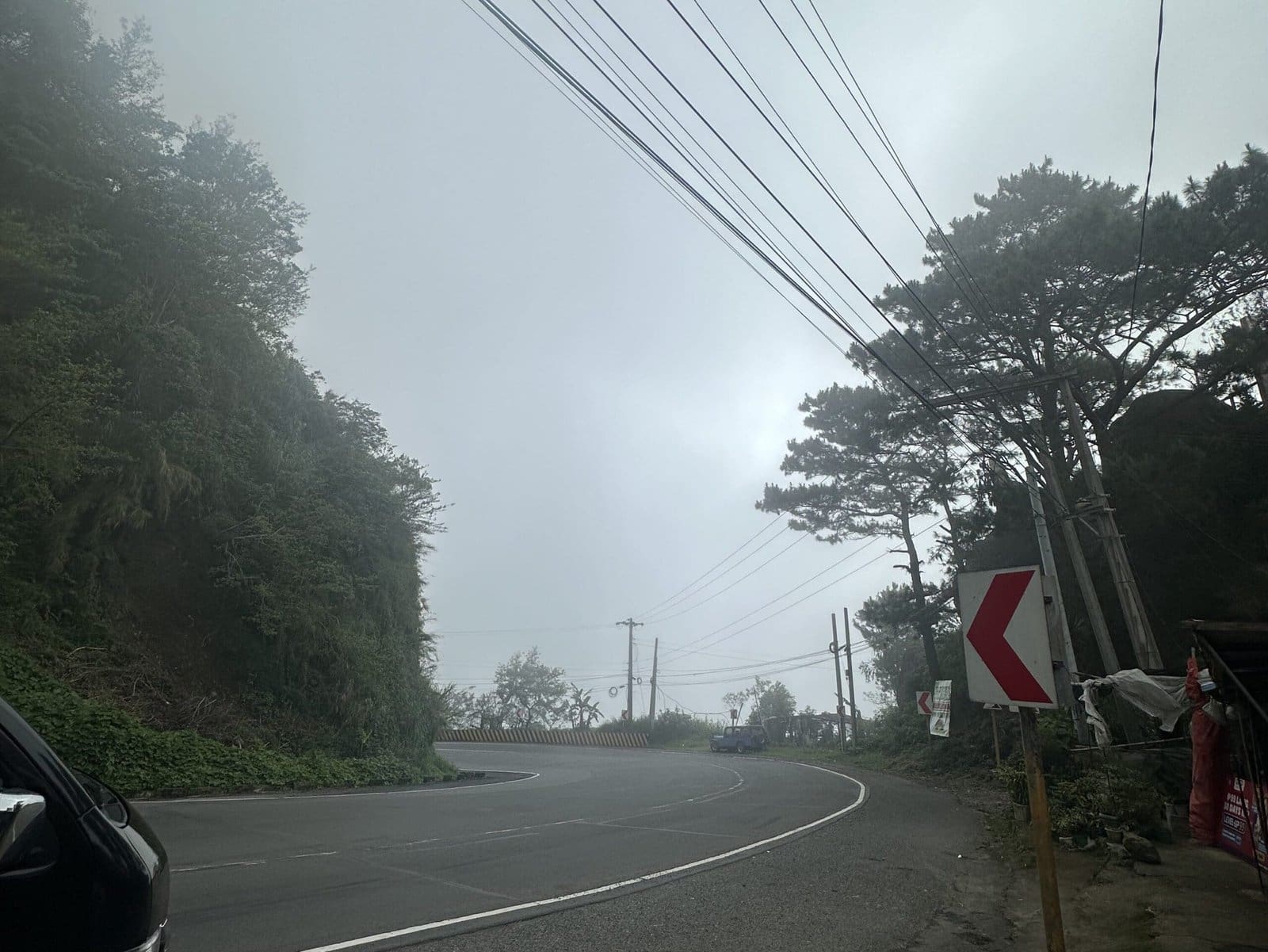
Before heading back to Manila, we made a quick stop at a strawberry farm. It wasn’t picking season, but we still bought snacks and souvenirs for pasalubong. The visit was short, but it felt like a small, sweet punctuation to our Baguio adventure.
Later, we stopped in Pampanga for dinner. Fatigue had settled into our shoulders, but the shared journey bus rides, ferry crossings, and long roads made us closer. At MOA, we said goodbye to people who had been strangers just 48 hours ago. Shared effort and discomfort had compressed time; bonds formed faster than we expected.
Then came the bus. Then the ferry. Then finally, home. My legs still remembered the slopes days later, a quiet reminder that Baguio’s uphill walks linger long after you’ve returned.
For Travelers Seeking Depth
If you’re planning your Local experiences Philippines trip to Baguio, there are a few things to keep in mind to make your visit both enjoyable and meaningful.
- Wear proper walking shoes. Even when you take vehicles between destinations, most attractions still require short walks or gentle inclines. Comfortable shoes make the experience less tiring and more immersive.
- Hydrate frequently. Baguio’s cooler climate can trick you into forgetting water, but altitude affects stamina more than you might expect.
- Dress in layers. Mornings and evenings can get chilly, and sudden breezes are common, so bring a jacket or sweater.
- Schedule rest periods. Don’t cram too many stops in a day. Pausing to sit, enjoy a view, or have a snack can make a big difference in how you experience the city.
- Carry small bills and coins. Most public toilets require a small fee, usually ₱5–₱25, so being prepared saves stress.
- Walk intentionally. Pay attention to how your body reacts. Notice changes in your breathing on uphill paths and how conversations shift when you’re moving together. These small moments of awareness make travel reflective and transformative.
Baguio’s terrain isn’t just a physical challenge; it shapes the rhythm of your day, the way you connect with companions, and how you experience the city. When you engage with the slopes rather than rush past them, every walk, pause, and view becomes part of the journey.
Lessons from Baguio’s Uphill Walks: Local Experiences Philippines
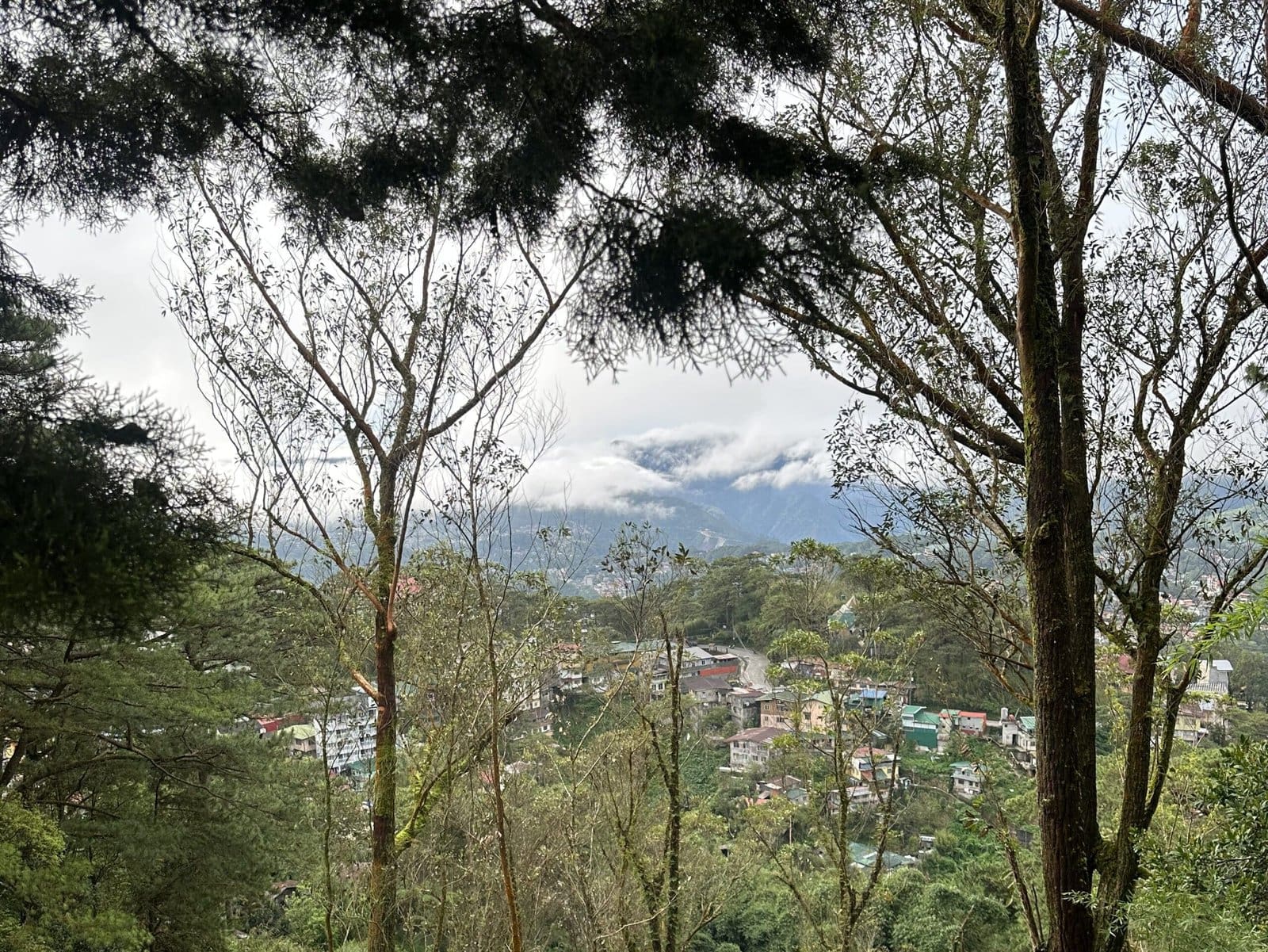
Baguio never pretended to be easy. The slopes were honest from the start, asking for effort, attention, and presence. Climbing them made me stronger. Climbing them with friends made me feel connected in ways that photos alone could never capture.
Among all the Local experiences Philippines offers, Baguio’s uphill walks stand out as quietly instructive. They remind you that growth rarely happens on flat ground. Every step asks you to pause, breathe, and keep going. Every incline offers perspective. And eventually, the view at the top justifies the effort.
If you’ve been to Baguio or if it’s still on your list, I want to hear from you: which uphill walk taught you something about patience, friendship, or perspective? Share your story in the comments below, and let’s celebrate the climbs that shape us.
FAQs About Visiting Baguio City
1. What’s the best time to visit Baguio?
The cooler months from November to February are ideal for escaping the lowland heat, enjoying pine-scented air, and attending seasonal events like the Panagbenga Flower Festival in February.
2. Is Baguio kid-friendly?
Absolutely. Parks like Burnham and Wright Park offer safe spaces for children to explore, ride bikes, or interact with nature. Many attractions, like Mines View Park or Botanical Garden, can be enjoyed with family.
3. How much cash should I bring?
While some places accept cards, many markets, street vendors, and smaller attractions operate on cash only. Budget for meals, small fees, and souvenirs. I spent ₱15k on my whole trip.
4. What local snacks or foods should I try?
Don’t miss strawberry taho, ube jam, Baguio longganisa, and fresh produce from the markets. Street food along Session Road and night markets offers authentic, quick bites.
5. How long should I spend in Baguio to explore properly?
Two to three days is ideal to cover major attractions, parks, markets, and some hidden gems without rushing. More time allows for relaxed walks and meaningful local experiences.


