Where to Stay in Uganda: Your Travel Style Guide

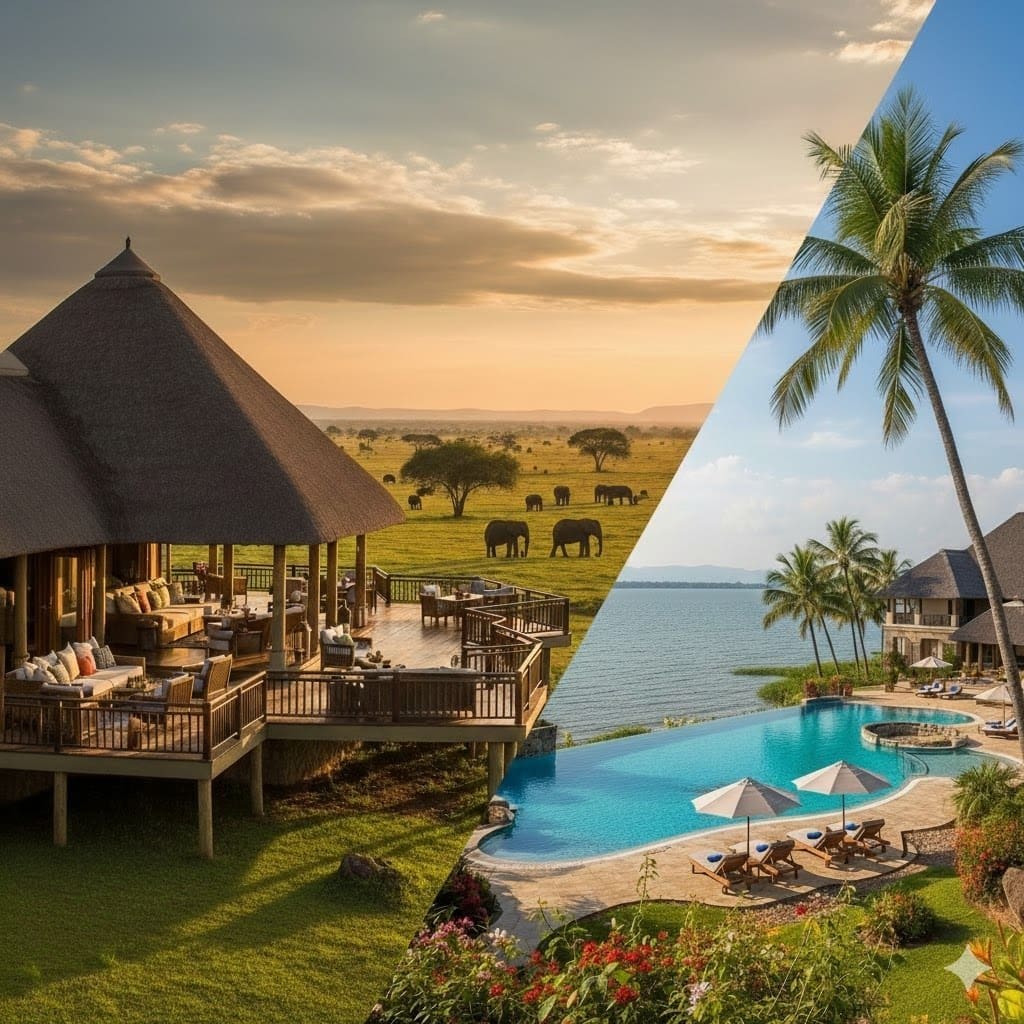
“Where to stay in Uganda” is one of the most searched questions in Uganda travel planning, and honestly, it makes perfect sense. Uganda offers a wide spectrum of accommodation options shaped by geography, travel style, and budget. The choice is not simply about finding a comfortable bed. It is about designing how your journey unfolds from one destination to the next.
Uganda’s tourism landscape has been steadily expanding. According to the Country Summary Report: Uganda 2023, the country welcomed more than 1.5 million international visitors annually before global travel disruptions, with nature, culture, and adventure ranking among the top motivations for travel. As interest grows, accommodation options continue to diversify, and choosing where to stay becomes both exciting and complex.
This Uganda accommodation guide focuses on clarity rather than opinions. It explores how to match Uganda travel styles with the right type of stay, how Uganda resorts vs hotels differ, and how to make smart choices without relying on reviews or personal experiences. By the end of this guide, you will have a clear framework for deciding where to stay in Uganda in a way that aligns with your travel style, itinerary, and expectations.
Why Choosing Where to Stay in Uganda Matters More Than You Think
Uganda is not a single-type destination. It is a country of contrasts—busy cities and quiet lakeshores, dense forests and open savannahs, cultural corridors and modern urban centers. Each setting offers different accommodation structures, and each structure subtly shapes how travelers experience the country.
When accommodation choices are made without considering travel style, trips can feel fragmented. Travelers may spend more time commuting than exploring, or feel disconnected from the landscapes they hoped to experience. When accommodation aligns with travel style, however, movement becomes smoother, planning feels lighter, and the journey flows more naturally.
Where to stay in Uganda, therefore, is not a technical decision or a last-minute detail. It is a strategic choice that quietly influences the pace, mood, and direction of an entire trip. And to understand why so many travelers are drawn to Uganda’s diversity in the first place, it helps to see the country beyond maps and itineraries.
Understanding Uganda Travel Styles
Travel styles are not labels; they are patterns. Understanding them makes it easier to connect accommodation choices with how you actually plan to move, explore, and rest.
1. Solo Travelers
If you are traveling alone, flexibility usually matters more than scale. Accommodation choices often lean toward accessibility, safety, and proximity to transport routes or urban centers. The aim is to stay connected without being locked into rigid schedules.
In Uganda travel planning, solo travel styles often align with compact stays in well-connected locations. This is especially relevant when itineraries involve multiple destinations or frequent movement across regions.
2. Group Travelers
Group travel changes the logic of accommodation. Space, coordination, and shared environments become essential. Instead of focusing on individual convenience, group travelers often need settings that support collective movement and smooth organization.
Rather than counting rooms alone, it helps to look at how the layout of a stay supports interaction, planning, and shared routines—factors that often shape how efficiently a group moves through its itinerary.
3. Family Travelers
Families often prioritize predictability and safety. Accommodation choices tend to balance comfort with practicality, while the surrounding environment plays a significant role in shaping how easily family members move, rest, and coordinate daily plans.
In Uganda, family travel styles often align with stays that offer structured spaces and controlled environments, making travel feel more manageable and less chaotic.
4. Adventure-Focused Travelers
Adventure-focused travelers often follow nature rather than cities. Their accommodation choices are shaped by proximity to national parks, forests, rivers, and mountains. Where to stay in Uganda for adventure travel often depends on how close the accommodation is to activity zones rather than urban centers.

5. Culture-Focused Travelers
Culture-focused travelers often seek proximity to heritage sites, local communities, and historical routes. Their accommodation choices reflect a desire to stay within cultural landscapes rather than purely commercial zones. In Uganda travel planning, cultural travel styles often intersect with regions that are less urbanized but rich in heritage, making location a key factor in accommodation decisions.
6. Luxury-Oriented Travelers
Luxury-oriented travelers often prioritize space, privacy, and atmosphere. Their accommodation choices tend to move away from dense urban settings toward environments that offer calm, design, and curated amenities. This travel style naturally connects with Uganda luxury stays and resort-style environments, where the pace is slower, and the setting is more immersive.
Uganda Accommodation Guide: Main Types of Stays
Understanding the main types of accommodation helps travelers connect their travel style with the right structural choice.
Hotels in Urban Centers
Hotels dominate Uganda’s major cities, especially Kampala and Entebbe. They are designed for efficiency, accessibility, and short stays. Their structure supports travelers who prioritize connectivity and proximity to business districts, transport hubs, and urban infrastructure. In discussions about Uganda resorts vs hotels, urban hotels often represent speed and convenience rather than space and immersion.
Lodges Near National Parks
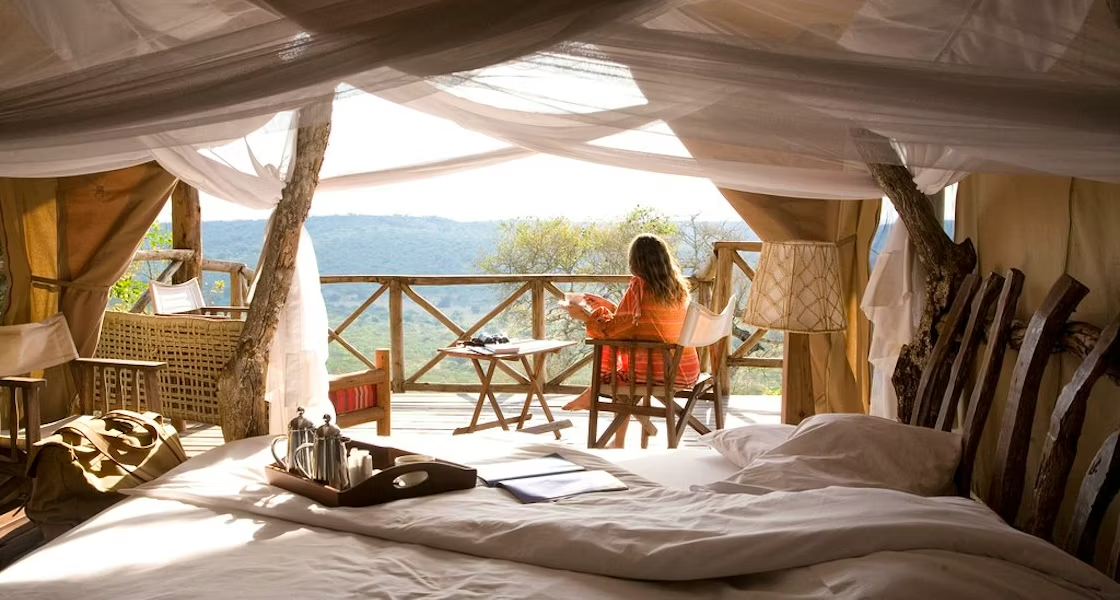
Lodges are most commonly found near Uganda’s national parks and conservation areas. They are designed to support nature-based itineraries and structured travel routes, making them ideal for travelers who want to stay close to wildlife and landscapes.
What sets lodges apart is not just comfort or design, but proximity. Their real value lies in being positioned within or near ecological zones, where mornings start closer to game drives, forests, rivers, and open savannahs. For many travelers, lodges create a natural balance between immersion in nature and practical comfort.
Guesthouses and Budget Stays
Guesthouses and budget stays offer practical options for travelers prioritizing affordability. They are often located in residential neighborhoods or secondary towns. For certain Uganda travel styles, these options align with short-term stays or highly mobile itineraries.
Resort-Style Stays
Resort-style stays are designed around environment and experience rather than pure location. They often integrate nature, architecture, and amenities into a single setting.
In the conversation about Uganda luxury stays and Uganda resorts versus hotels, resort-style environments represent a shift from functionality to atmosphere. Some travelers prefer resort-style stays for privacy, wellness, and a slower pace.
Eco-Lodges and Nature Retreats
Eco-lodges focus on sustainability and environmental integration. Their design often emphasizes harmony with nature rather than urban convenience.
In Uganda travel planning, eco-lodges often align with travelers seeking quiet environments and nature-based experiences, where surroundings shape the rhythm of the stay as much as the accommodation itself.
Where to Stay in Uganda by Destination
Uganda is not a one-size-fits-all destination. Where you stay often depends on what kind of landscapes you want to wake up to, how far you plan to move each day, and how close you want to be to nature, cities, or culture. Here’s how different regions shape accommodation choices.
Kampala and Entebbe
Kampala and Entebbe are the main gateways into Uganda, and they offer some of the widest accommodation choices in the country. From busy city hotels to peaceful lakeside stays, the options reflect the contrast between urban energy and quiet escape.
When deciding where to stay in Uganda, within Kampala or Entebbe, travelers often balance convenience with atmosphere. Staying in central areas makes it easier to access business hubs, restaurants, and transport routes. Choosing quieter neighborhoods or lakeside locations, on the other hand, offers more space, fresh air, and a slower pace.
If your itinerary involves frequent movement or short stays, central locations often make sense. If you want calmer mornings and scenic views, slightly outside the city can feel more aligned.
Bwindi Impenetrable Forest and Southwestern Uganda
Southwestern Uganda feels different the moment you arrive. Forests, rolling hills, and conservation areas define the landscape, and accommodation choices are shaped by terrain as much as by comfort.
In this region, where to stay in Uganda often comes down to proximity to forest zones and travel routes. The closer you are to Bwindi and other natural attractions, the less time you spend on winding roads and the more time you spend experiencing nature.
Here, the environment is not just a backdrop—it actively shapes where travelers stay. Many accommodations are designed to blend into the landscape, making the stay feel like part of the adventure rather than just a place to sleep.

Queen Elizabeth National Park Region
The Queen Elizabeth National Park region is defined by wide savannahs, crater lakes, and winding water channels. Accommodation options here are closely tied to wildlife and nature-focused itineraries.
In Uganda travel planning, this region shows how powerful location can be. Staying closer to the park often means earlier game drives, shorter travel times, and a deeper connection to the landscape. Distance, terrain, and road conditions usually matter more than urban features or luxury details.
If wildlife and scenery are at the center of your trip, choosing accommodation near the park can completely change how your days unfold.

Jinja and Eastern Uganda
Jinja is Uganda’s adventure capital, known for the Nile, outdoor activities, and relaxed riverside vibes. Accommodation here often reflects leisure-oriented travel styles, from riverside lodges to town-based hotels.
When thinking about where to stay in Uganda in Jinja, travelers often weigh proximity to water landscapes against access to town amenities. Staying near the river feels immersive and calm, while staying closer to town offers easier access to cafés, transport, and activity hubs.
Your choice here often depends on how you want your days to feel—more adventurous and nature-focused, or more connected and social.
Northern Uganda and Cultural Corridors
Northern Uganda moves at a different rhythm. Towns are more spaced out, routes are longer, and cultural landscapes often take center stage over urban infrastructure. Accommodation in this region tends to follow travel routes and community settings rather than city convenience. Where you stay is usually influenced by access to cultural sites, historical routes, and local communities.
In Northern Uganda, accommodation choices often mirror the cultural geography itself. History, movement, and everyday life quietly shape where travelers stay, making the experience feel less commercial and more rooted in place.

Strategic Travel Planning Tips for Uganda
If there is one thing that makes Uganda travel planning easier, it is thinking about accommodation as part of the journey, not an afterthought.
Align accommodation with the travel route
Instead of choosing all your stays based on one factor, it helps to match each accommodation choice to a specific part of your route. Some locations demand proximity and speed, while others reward space and calm.
When accommodation follows the logic of movement, travel feels less rushed and more intentional. It also reduces unnecessary back-and-forth between destinations and creates a smoother rhythm across the trip.
Balance comfort, budget, and environment
Every accommodation decision involves trade-offs. Comfort, budget, and environment rarely meet perfectly in one place. The key is not to chase perfection, but to understand what matters most for each stage of the journey. Sometimes accessibility matters more than atmosphere. Other times, environment matters more than proximity.
When travelers understand these trade-offs, their choices feel deliberate rather than accidental. In conversations about where to stay in Uganda, this balance often matters more than finding the “best” option.
Think beyond rooms and facilities
Accommodation is not just a place to sleep. It quietly shapes how travelers move through landscapes, how they manage time, and how they experience space.
When travelers begin to see accommodation as part of the travel design, their decisions become more strategic and less reactive. This mindset sits at the heart of any advanced Uganda accommodation guide.
Uganda Resorts vs Hotels: Understanding the Real Difference
When people think about where to stay in Uganda, they often compare hotels and resort-style stays. At first glance, the difference may seem like price or design. In reality, the difference runs deeper.
Hotels are usually built for efficiency. They are often located in busy areas, designed for quick access, and structured for short stays. Their layout supports movement, connectivity, and convenience. They fit itineraries that prioritize speed and proximity.
Resort-style stays, on the other hand, are shaped by space and atmosphere. They tend to be located in quieter environments and integrate natural surroundings into their design. Instead of focusing only on access, they focus on balance—between comfort, privacy, and environment.
In Uganda travel planning, this distinction matters because it changes how days unfold. Some itineraries benefit from being close to everything. Others benefit from stepping away from density and noise. Some travelers prefer resort-style stays for privacy, wellness, and a slower pace.

Uganda Luxury Stays vs Practical Options: Making Smart Choices
Choosing between Uganda luxury stays and practical accommodation options is not about choosing what is “better.” It is about choosing what fits.
Luxury-oriented stays in Uganda often emphasize environment, design, and curated amenities. They are usually positioned in locations that support calm, privacy, and scenic views. These options often align with travelers who value atmosphere as much as location.
Practical options, in contrast, focus on function. They support itineraries that involve frequent movement, shorter stays, or budget-conscious planning. They often prioritize accessibility and logistics over the environment.
When thinking about where to stay in Uganda, it rarely makes sense to choose only one category for the entire trip. Many travelers align different types of stays with different parts of their itinerary. This layered approach is one of the most effective strategies in Uganda travel planning.
FAQs
1. Is it better to stay in cities or outside cities?
It depends on how you plan to move. City stays support connectivity and logistics. Stays outside cities often offer more space and quieter environments.
If your itinerary involves frequent movement between destinations, urban stays may feel more practical. If your plan emphasizes nature, calm, or slower pacing, non-urban stays may feel more aligned. The choice is not just about preference. It is about how the journey is structured.
2. How close should accommodation be to attractions?
Distance matters more than many travelers expect. Staying far from key attractions can quietly stretch travel time and limit flexibility, even if the place looks “close enough” on a map.
In Uganda, proximity is not just about kilometers. Terrain, road conditions, and traffic patterns often matter just as much. A short distance on Google Maps can easily turn into a long, tiring journey on the ground. Choosing accommodation with realistic travel time in mind can make the difference between a smooth itinerary and a rushed one.
3. Should accommodation be booked early?
Uganda’s tourism ecosystem has been expanding steadily, and accommodation availability can shift depending on season, location, and demand. Across East Africa, nature-based tourism has grown consistently in recent years, with protected areas attracting a large share of visitors. This trend increases competition for well-located accommodation options.
Early planning often reduces uncertainty in Uganda travel planning and allows travelers to make more intentional choices.
4. What should travelers check before choosing where to stay in Uganda?
Instead of focusing only on photos or price, it helps to look at structural factors:
- Location relative to itinerary
- Accessibility and road conditions
- Space and environment
- Alignment with travel style
These factors often shape the quality of a trip more than surface-level features.
The Bigger Picture: Choosing the Right Experience, Not Just a Place to Stay
Where to stay in Uganda is ultimately a question of experience design. Every accommodation choice influences how a trip unfolds—how days start, how evenings feel, and how movement flows between destinations. Uganda’s accommodation landscape continues to grow as tourism expands, and nature and culture-based travel now account for a large share of visitor motivation in East Africa.
Some travelers naturally gravitate toward resort-style stays for privacy, wellness, and a slower pace. Choosing a stay that aligns with your travel style and environment can turn accommodation into more than just a place to sleep—it can become a defining part of the journey itself.
And now, we’d love to hear from you: What’s your travel style when exploring Uganda? Do you lean toward lively city hotels, immersive forest lodges, or serene resort-style escapes? Share your thoughts or questions in the comments below — your experience could inspire the next traveler!


