The Most Affordable Digital Nomad Destinations in Africa


Why Africa is no longer the “alternative” … it’s the upgrade.
For years, digital nomads chased the same pins on the map. Lisbon. Bali. Chiang Mai. Medellín. Each promised freedom, affordability, and a lifestyle optimized for remote work. Then something shifted. Prices rose. Crowds followed. And what once felt flexible started to feel competitive. That’s when Africa quietly entered the conversation.
Not as a compromise, but as a recalibration.
Today, some of the most affordable digital nomad destinations in Africa offer what overstimulated nomad hubs no longer can: space to think, costs that make sense, time zones that respect your body, and cultures that don’t revolve around selling an “expat lifestyle.” Africa isn’t cheaper because it lacks value. It’s affordable because it’s still priced for living, not for hype.
And for remote workers who care about sustainability, mental health, and long-term viability, that difference matters. You’re about to discover why the future of remote work isn’t found in overcrowded tourist hubs, but in the quiet, intentional, and remarkably affordable corners of Africa that are ready to welcome you.
Why Africa Is Quietly Becoming the Smart Nomad Move
Africa’s rise as a digital nomad region didn’t happen because influencers discovered it. It happened because math, biology, and burnout aligned.
Remote work expanded globally, but costs in traditional nomad hubs inflated faster than incomes. At the same time, people began to notice what constant long-haul travel was doing to their sleep, mood, and focus. Jet lag stopped feeling like a badge of honor and started feeling like a tax on mental health.
Africa sits in a rare sweet spot. Its time zones align closely with Europe, overlap cleanly with the Middle East, and remain workable for asynchronous collaboration with North America. That means fewer all-nighters, less circadian disruption, and more consistent routines — something most nomads underestimate until they lose it.
Add affordability, improving internet infrastructure, and deeply rooted cultures, and Africa becomes less of a wildcard and more of a strategy.
The Hidden Economics of Being a Digital Nomad in Africa
Affordability in Africa feels different because it’s not built on cutting corners; it’s built on proportionality.
Rent, food, transportation, and services often cost less, not because quality is lower, but because local economies haven’t been distorted by mass nomadic demand. You’re paying closer to what life actually costs, not what it’s been marked up to.
In many African cities, a comfortable apartment costs less than a cramped studio in Europe. Eating out feels normal again, not like a budget decision. Hiring help doesn’t carry guilt; it circulates money locally. Several long-term nomads interviewed by outlets like Go Nomads and Nomad workation describe Africa as the first place where remote income stopped feeling fragile. Expenses stabilized. Savings grew. Stress declined.
That’s not cheap living. That’s sustainable living.
Time Zones, Jet Lag, and the Mental Health Upside No One Talks About
We talk endlessly about jet lag’s downsides — the fog, the irritability, the sleep debt. But there’s another side to time-zone shifts that Africa handles unusually well. Africa allows you to be slightly out of sync without being disconnected.
For Europe-based teams, Africa often sits in the same or adjacent time zone. For global companies, mornings become deep-focus windows while the rest of the world sleeps. Meetings cluster instead of scattering. This rhythm creates psychological breathing room.
Nomads report fewer adrenaline spikes, more predictable days, and better sleep consistency — factors strongly linked to reduced anxiety and burnout. In a world optimized for urgency, Africa quietly supports calm productivity.
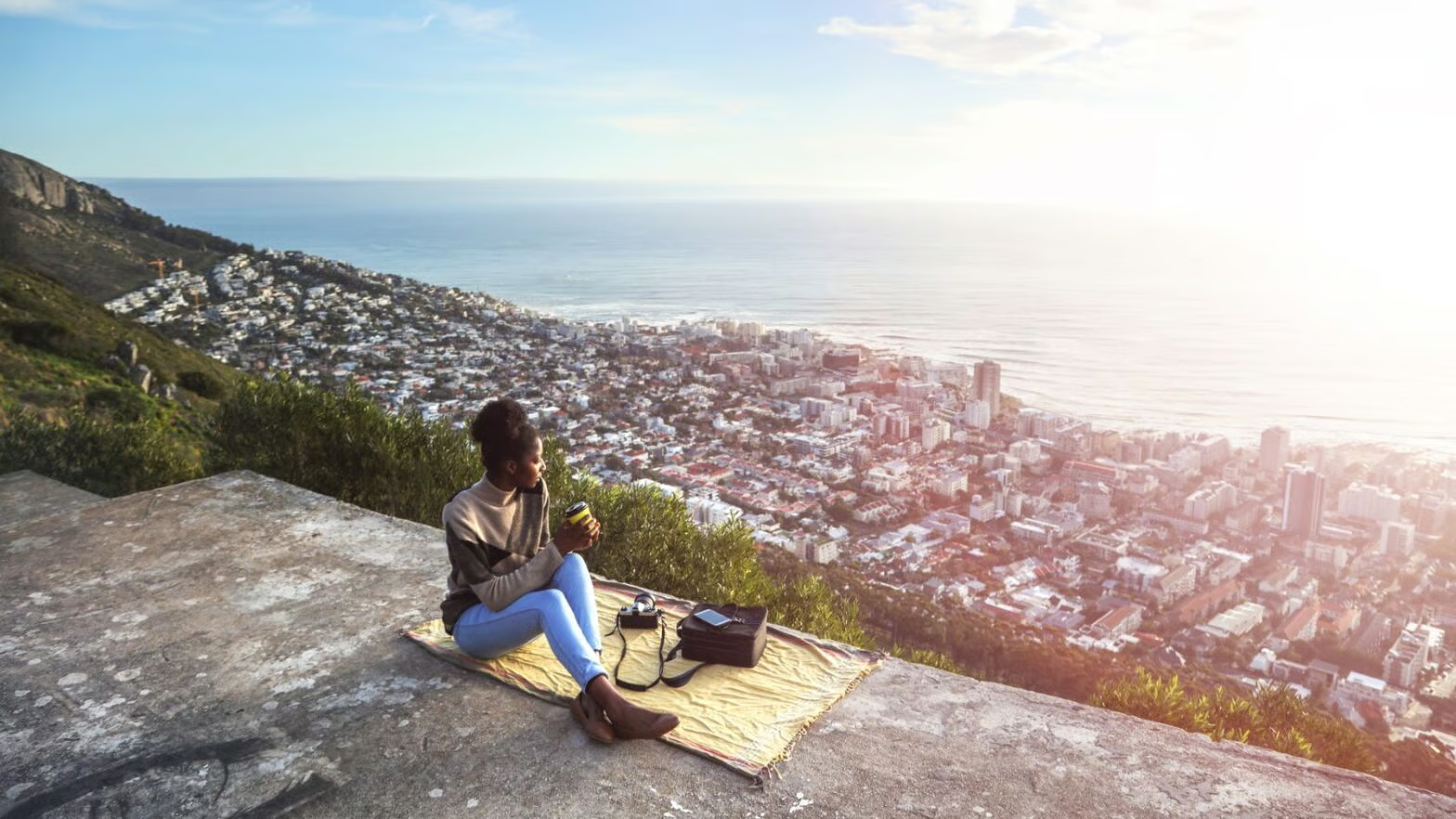
Cape Town: Infrastructure Meets Lifestyle Value
Cape Town often surprises first-time visitors. Not because it’s beautiful, that part is expected, but because it functions.
Fast internet, stable coworking spaces, reliable services, and a creative professional culture make it one of the most complete digital nomad destinations in Africa. Costs remain reasonable compared to Europe or Australia, especially outside peak tourist seasons.
What keeps people longer than planned is the balance. You can work hard in the morning, hike in the afternoon, and eat world-class food at night — without financial anxiety humming in the background.
Many nomads arrive for a month. Many stay for a year.
Nairobi: East Africa’s Intellectual and Tech Pulse
Nairobi doesn’t try to make life feel effortless. It makes it feel alive.
This is a city powered by motion—ideas crossing paths in cafés, policy debates unfolding beside startup pitches, and technology being built not as a luxury, but as a necessity. As one of Africa’s most influential tech and innovation hubs, Nairobi draws founders, data scientists, researchers, NGO professionals, and remote workers who want more than comfort. They want context.
The city’s tech ecosystem—often referred to as the “Silicon Savannah”—is no longer emerging. It’s operational. Fintech platforms, civic-tech tools, climate startups, and mobile-first solutions grow here because Nairobi understands scale differently. Solutions are built for millions, not margins. That mindset seeps into the air, and nomads who spend time here often say the same thing: your thinking stretches without you noticing.
Connectivity has quietly caught up to the ambition. Internet reliability has improved significantly across major neighborhoods, coworking spaces hum with consistent energy, and mobile data acts as a dependable backup rather than a last resort. Workflows stabilize. Deadlines feel doable. Momentum becomes habitual.
What Nairobi asks in return is engagement. The city challenges you to pay attention—to traffic, to conversation, to contrast. It’s not curated for outsiders, and that’s its strength. Costs remain manageable compared to global tech capitals, especially for long-term stays, and everyday life doesn’t feel inflated for foreign consumption.
For digital nomads who thrive on intellectual friction, Nairobi offers something rare: a place where work feels relevant, ideas feel urgent, and progress feels shared. You don’t just produce here. You participate.
Addis Ababa: The Thinking Nomad’s Capital
Addis Ababa rarely makes digital nomad shortlists—and that omission says more about the lists than the city.
As Africa’s diplomatic and political capital, Addis operates on a different frequency. This is where continental policy is debated, research agendas are shaped, and long-form thinking still matters. International organizations, embassies, universities, NGOs, and consultancies form the city’s backbone, attracting people who work with ideas rather than aesthetics.
Addis doesn’t present itself as a lifestyle destination, and it doesn’t need to. It’s a substance city, one that rewards patience, curiosity, and intellectual stamina. Days revolve around conversation, not spectacle. Cafés become meeting rooms. Meals stretch into dialogue. Thought moves more slowly here, but it moves deeper.
Living costs remain accessible, especially for long-term stays. Housing, food, and transportation still sit well below global capital averages, and the city’s communal food culture creates an easy sense of belonging. Time zone alignment with Europe and the Middle East makes real-time collaboration smooth, while asynchronous work with global teams feels natural rather than exhausting.
Internet consistency varies, and Addis doesn’t hide that reality. But mobile data is reliable, redundancy is common, and seasoned nomads adapt quickly by building layered connectivity. What the city lacks in frictionless infrastructure, it compensates for in focus. There are fewer performative distractions, fewer lifestyle expectations, and more room for sustained work.
Addis suits writers, analysts, policy advisors, NGO consultants, researchers, and remote professionals who value depth over noise. It’s not a place to broadcast a life. It’s a place to build one—quietly, thoughtfully, and with intention.

Zanzibar: When Slowness Becomes the Point
Zanzibar doesn’t rush you, and that’s the point.
This is not a place built for constant output or packed calendars. It’s a place that gently resets your relationship with time. Days stretch. Priorities reorder themselves. Speed stops being the default metric for productivity.
For creatives, writers, researchers, and asynchronous workers, Zanzibar offers something increasingly rare in 2026: permission to slow down without falling behind. Internet connectivity works well enough for steady workflows, especially for those who design their schedules intentionally. Costs remain low compared to global island destinations, and daily life asks very little of your attention.
What Zanzibar gives in return is mental clarity. Fewer meetings feel natural here. Deep thinking becomes easier. Ideas unfold instead of being forced. Many nomads who arrive exhausted—burnt out from constant movement or overstimulation—describe a quiet recalibration happening within weeks.
Work still gets done. But it no longer consumes the day. Zanzibar isn’t about doing more. It’s about doing what matters—and leaving the rest behind.
Kigali: Calm, Clean, and Focused
Kigali feels designed with purpose.
From the moment you arrive, the city communicates clarity. Streets stay clean not as a marketing feature, but as a civic habit. Services work efficiently. Systems feel thought through. That sense of order seeps into your routine, creating an environment where focus comes naturally instead of being forced.
For digital nomads, this matters more than it sounds. Kigali minimizes cognitive noise. There’s less visual clutter, fewer unnecessary interruptions, and a rhythm that supports long stretches of deep work. Internet reliability continues to improve year over year, coworking spaces remain uncrowded, and everyday logistics—transport, groceries, safety—rarely demand mental energy.
Costs remain reasonable, especially for long-term stays, and the city’s strong safety record adds a quiet layer of psychological comfort. You move through Kigali without hypervigilance. That alone frees attention for creative and analytical work.
Kigali doesn’t compete for your attention. It protects it. For nomads who value structure without pressure, calm without boredom, and progress without chaos, Kigali delivers—quietly, consistently, and with confidence.

Visas, Internet, and Staying Longer Than Planned
Africa’s visa landscape isn’t uniform—but it’s often more human than bureaucratic.
Rules vary by country, yet many nomads are surprised by how flexible long stays can be when approached respectfully. Tourist extensions are common. Border runs still exist in some regions. And as remote work becomes a permanent reality, several African countries are actively exploring or refining nomad-friendly visa frameworks in 2026. The process may not always be digitized or polished, but it’s often pragmatic and responsive in ways that highly automated systems no longer are.
What matters most is attitude. Nomads who engage with local processes patiently, plan ahead, and follow regulations tend to stay longer than expected—not because they’re gaming the system, but because the system allows room for real people.
Connectivity tells a similar story. Internet outages do happen, and anyone claiming otherwise hasn’t worked long enough. But Africa’s mobile-first culture changes the equation entirely. High-quality mobile data fills gaps quickly, hotspots act as reliable backups, and redundancy becomes a standard part of remote work life rather than an emergency response.
The difference between frustration and flow comes down to preparation.
Nomads who struggle often expect perfection. Nomads who thrive build systems—dual SIMs, flexible schedules, offline workflows, and realistic expectations. Once that mindset clicks, connectivity stops feeling fragile and starts feeling adaptable. Africa rewards flexibility. And flexibility is what makes people stay longer than planned.

The Africa Nomad Mindset Shift
Africa changes how digital nomads measure progress.
In many places, success looks like optimization—faster Wi-Fi, tighter schedules, more output per hour. Africa gently disrupts that equation. Here, presence matters more than productivity metrics. Days are shaped by rhythm rather than rush. Conversations aren’t compressed into calendar slots. Work expands to fit life instead of the other way around.
This shift isn’t about doing less. It’s about doing what matters without burning through your nervous system.
Nomads often arrive focused on affordability, expecting Africa to be a temporary solution or a strategic pause. What surprises them is how quickly perspective changes. Costs matter less. Time matters more. Life feels fuller, not because it’s louder, but because it’s grounded.
Africa doesn’t ask you to hustle harder. It asks you to pay attention. And for many, that’s the most productive change of all.
Africa Isn’t the Cheapest Choice; It’s the Wisest One
Africa doesn’t sell the dream loudly. It doesn’t package freedom into templates or lifestyles. It lets you live it quietly.
If you’re searching for affordable digital nomad destinations in Africa, what you’ll discover goes beyond numbers. You’ll find balance—between work and life, ambition and health, movement and meaning. You’ll find places where your income stretches without stretching you thin. Where productivity doesn’t require exhaustion. Where your days feel intentional instead of reactive.
The question isn’t whether Africa is ready for digital nomads. It’s whether digital nomads are ready for Africa.
Ready to slow down without falling behind.
Ready to work deeply instead of constantly.
Ready to live well without turning life into content.
So, which African city are you curious about? And which one still makes you hesitate?
Drop your thoughts or questions in the comments. That’s where the real conversation begins.
FAQs: What People Still Ask About Digital Nomading in Africa
Is Africa actually safe for digital nomads?
Safety varies by city and neighborhood, just like anywhere else. Many African cities popular with remote workers—such as Kigali, Cape Town, Nairobi, and Addis Ababa—have well-established areas that nomads navigate comfortably every day. Most safety challenges are predictable and manageable with local awareness, not fear-driven assumptions.
Can you really work reliably with the internet in Africa in 2026?
Yes, if you work smart. Fixed broadband continues to improve, but Africa’s strength lies in mobile data. Many nomads rely on dual SIM setups, hotspots, and flexible schedules. Reliability here isn’t about perfection—it’s about redundancy. Once that mindset clicks, work becomes surprisingly stable.
Is Africa only suitable for short stays, or can you live there long-term?
Many nomads plan short stays and end up staying months or years. Visa flexibility, cost stability, and lifestyle sustainability make long-term living realistic when approached responsibly. Africa often works better for those thinking in seasons rather than sprints.
Do African cities feel isolating for solo nomads?
Not typically. Community forms differently here—less through nomad bubbles and more through shared spaces, coworking hubs, cafés, and local networks. For those willing to engage beyond expat circles, Africa often feels more socially grounded than oversaturated nomad hotspots.
Is Africa better for certain types of remote workers?
Yes. Africa particularly suits writers, consultants, researchers, educators, developers, creatives, and asynchronous workers—anyone whose work benefits from focus, time-zone alignment, and mental clarity rather than constant meetings.